The Rise of Dimensional Surfaces: How Texture Is Transforming Modern Interiors
or years, smooth finishes felt like the safest choice. Flat cabinetry, polished tile, and seamless slabs defined modern kitchens because they looked clean and predictable. But lately, interiors have started moving in a different direction.
Homes are beginning to feel more layered again. People want spaces that feel warm, personal, and lived-in—not perfectly flat. That shift is exactly why dimensional surfaces are showing up everywhere right now.
From sculpted backsplashes to fluted stone and ribbed cabinetry, texture has become one of the most influential elements in modern kitchen design. It adds depth without relying on bold color, making it especially appealing in neutral homes. If your Pinterest feed has been full of textured kitchens lately, you’re definitely not imagining it.

This sculpted stone backsplash turns texture into a true focal point, adding movement and an architectural feel to the kitchen. The dimensional surface brings warmth and depth to the neutral palette while keeping the space calm, modern, and effortlessly elevated.
Why Ultra-Smooth Finishes Are Losing Their Appeal
Flat finishes aren’t necessarily outdated—they just don’t create much visual interest on their own anymore. As color palettes moved toward soft neutrals and warm minimalism, many spaces started to feel a little too quiet.
Texture changes that instantly. It creates movement, catches light, and adds subtle contrast without overwhelming the room. Even small amounts of dimension can make a kitchen feel warmer and more inviting, especially when the overall design stays simple.
Instead of layering more décor, designers are letting materials and surfaces carry the visual weight. The result feels calmer, but far more intentional.

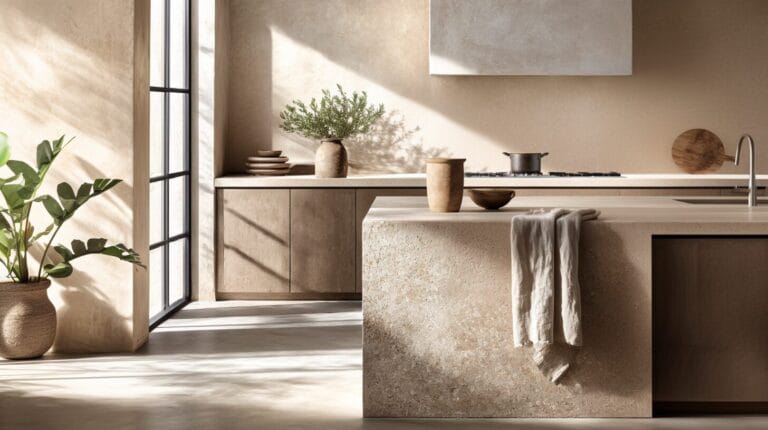
This neutral kitchen shows how subtle dimensional surfaces can completely change the feel of a space. The textured plaster wall adds warmth and movement while keeping the overall design calm and minimal, proving that texture can make a kitchen feel layered without adding color or clutter.

This kitchen shows how dimensional surfaces soften a sleek design without losing that clean, modern feel. The textured stone backsplash adds subtle depth and movement, helping neutral cabinetry feel warmer and more layered while keeping the space bright and timeless.

This kitchen highlights how dimensional stone surfaces can make a neutral space feel rich and layered without adding color. The textured backsplash and stone detailing create soft movement and depth, giving the kitchen a calm, high-end feel that still feels warm and livable.
Dimensional Backsplashes Are Becoming the Kitchen’s Focal Point
The backsplash has quietly evolved from a practical feature into one of the most important design moments in the kitchen. A dimensional backsplash draws the eye immediately, even in the most understated spaces.
Textured tile or carved stone introduces depth in an unexpected way. As natural light shifts throughout the day, raised surfaces create soft shadows that make the kitchen feel alive without feeling busy. It’s a relatively small area, but it delivers a big visual impact—making it one of the easiest ways to introduce texture into a space.

This dimensional backsplash adds instant depth and movement to a neutral kitchen without overpowering the space. The layered texture catches natural light beautifully, making the stone surfaces feel warm, elevated, and full of subtle detail — a perfect example of how texture can become the focal point in modern kitchen design.

This textured stone backsplash brings natural depth and character to a neutral kitchen while keeping the overall look calm and timeless. The layered stone surface catches light throughout the day, adding warmth and subtle movement that makes the space feel organic and thoughtfully designed.
Fluted and Ribbed Surfaces Are Dominating Pinterest Right Now
If there’s one texture trend consistently showing up in saved kitchens, it’s fluting and ribbing. These surfaces feel architectural while still maintaining softness, which makes them easy to live with long-term.
Vertical lines add rhythm and structure, while natural materials keep the look grounded and warm. Fluted stone backsplashes and ribbed tile designs photograph especially well in bright kitchens with warm neutral palettes, which is part of why they perform so well on Pinterest. They feel elevated, but never overly dramatic.

This kitchen shows how fluted surfaces can add structure and softness at the same time. The ribbed range hood creates vertical movement and subtle shadow, giving the neutral kitchen more depth while keeping the overall look warm and timeless.

This ribbed tile backsplash shows how vertical texture can completely transform a neutral kitchen. The fluted surface creates soft shadow and movement throughout the day, adding depth while keeping the space warm, minimal, and easy to live with.
Layering Texture Instead of Color Creates a High-End Look
One of the most sophisticated ways to use dimensional surfaces is by layering texture rather than introducing more color. Ribbed cabinetry paired with a textured backsplash creates depth while keeping the overall palette calm.
When tones stay consistent—soft beige, warm stone, muted gray, or creamy white—the space feels cohesive instead of busy. This layered approach is becoming a signature of modern textured interior design, especially in kitchens designed to feel calm, custom, and timeless.

This kitchen shows how ribbed cabinetry and textured backsplashes work together to create depth without adding color. The layered surfaces add warmth and architectural interest, making the neutral palette feel intentional, modern, and quietly high-end.

This kitchen shows how repeating ribbed textures can create a cohesive and architectural look without adding extra color. The layered dimensional surfaces bring warmth and depth to the neutral palette, making the space feel calm, modern, and thoughtfully designed.

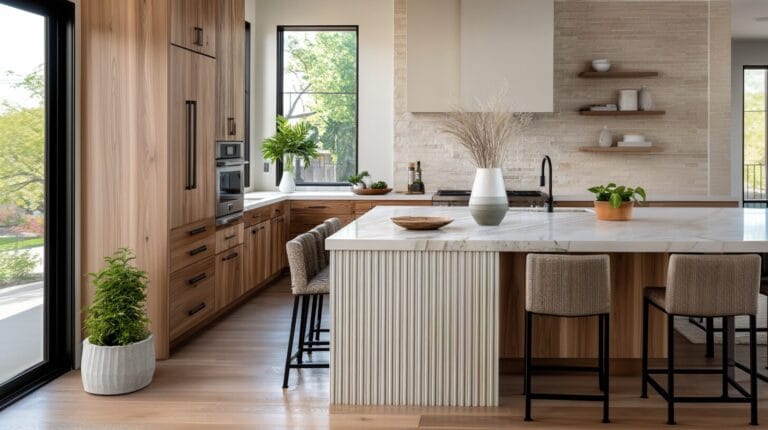
This kitchen pairs ribbed wood cabinetry with a textured backsplash to create a layered, dimensional look that still feels calm and natural. The vertical texture adds warmth and movement, making the neutral palette feel rich and inviting without relying on bold color.

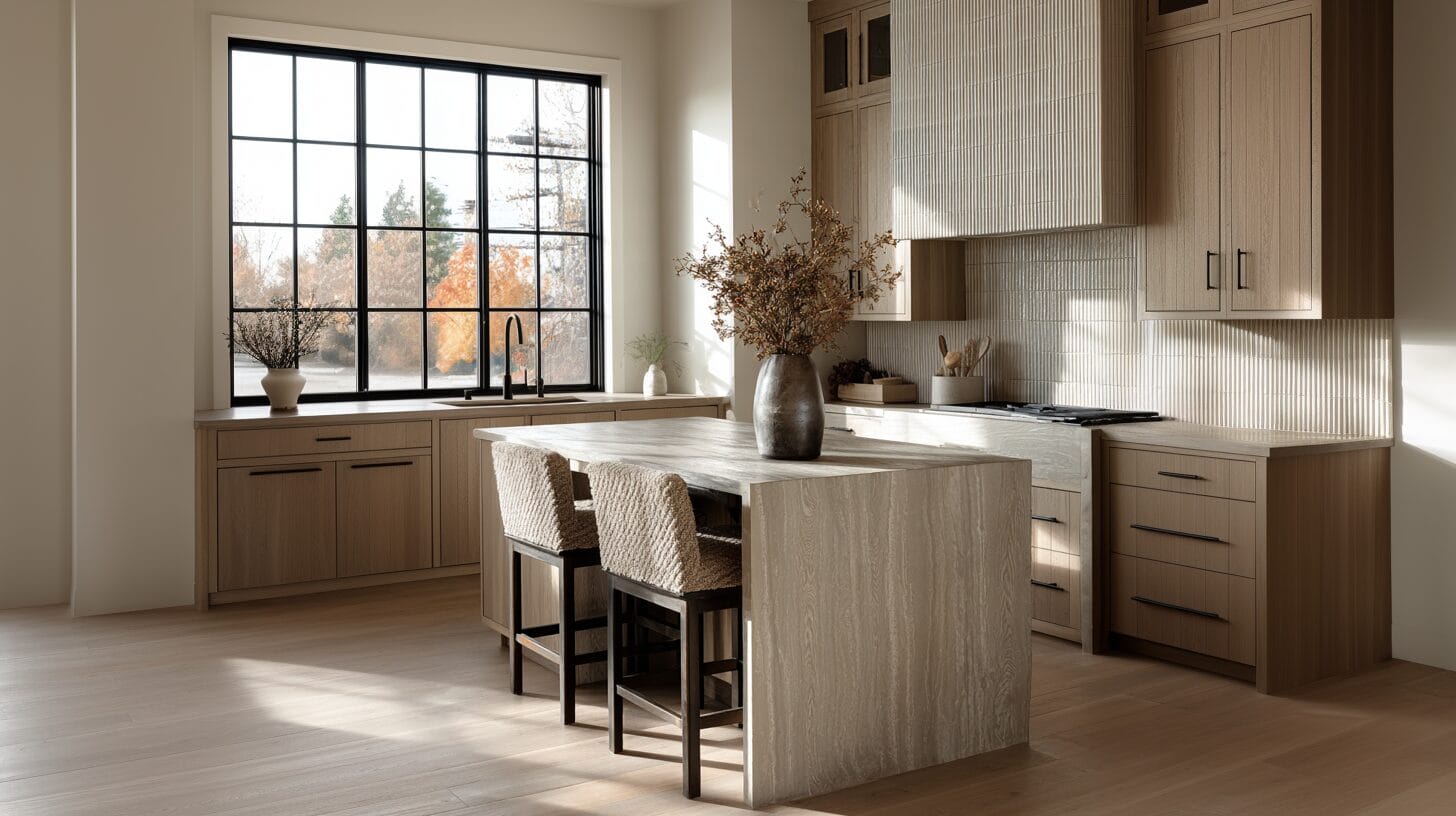
This kitchen shows how ribbed cabinetry can bring warmth and architectural texture to a modern space. Paired with a stone waterfall island and neutral finishes, the dimensional surfaces create depth while keeping the overall design calm, clean, and timeless.
Subtle Texture Keeps Neutral Kitchens Interesting
Not every dimensional surface needs to make a statement. Some of the most successful spaces rely on quiet texture instead of bold contrast.
Softly sculpted tile, lightly fluted stone, or plaster-style finishes add warmth while keeping the overall look serene. This approach works especially well in Scandinavian and minimalist kitchens, where simplicity is key but warmth still matters. It’s proof that neutral kitchens don’t need strong color to feel inviting—thoughtful surface detail does the work instead.

This kitchen shows how subtle texture can make neutral spaces feel warm and inviting without adding contrast or color. The softly textured tile and plaster finish create gentle movement, proving that dimensional surfaces don’t need to be bold to make an impact.

This kitchen shows how subtle ribbed texture can quietly elevate a neutral space without overpowering it. The soft vertical lines add depth and shadow behind open shelving, creating a warm, layered look that feels calm, modern, and easy to live with.

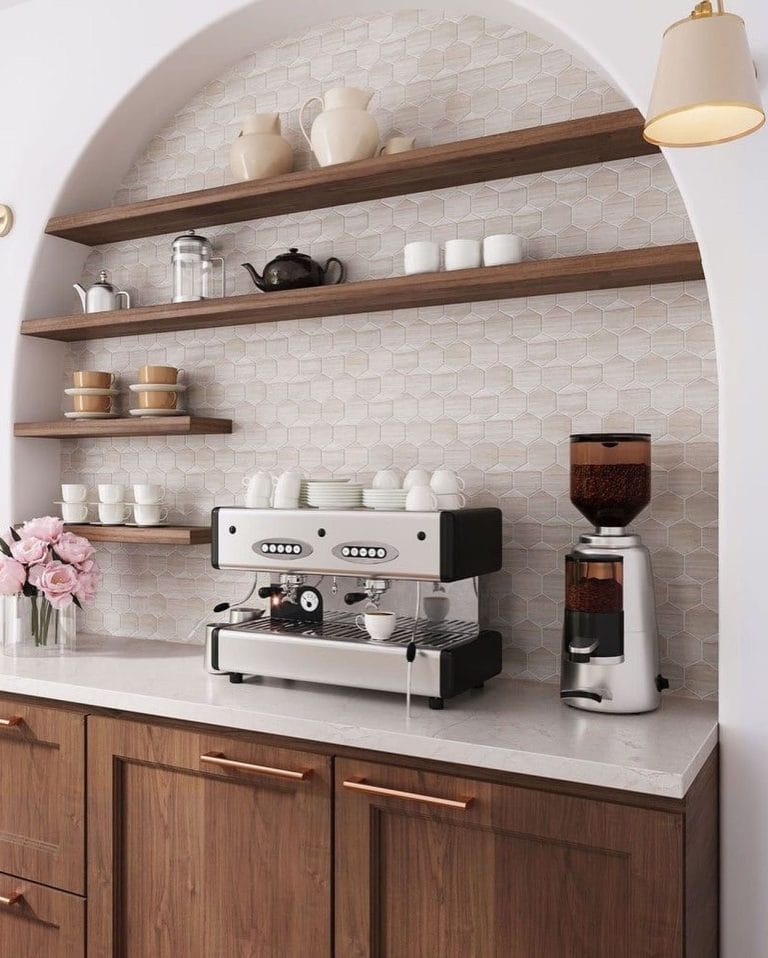
This textured mosaic backsplash adds gentle dimension while keeping the kitchen light and neutral. The small variations in tile surface catch natural light beautifully, creating depth and warmth without overpowering the space. It’s a perfect example of how subtle texture can make a kitchen feel more layered and inviting.
Organic Texture vs. Architectural Texture: Choosing the Right Feel
Texture can completely change the mood of a space depending on how it’s used. Some homes lean soft and organic, while others feel more structured and architectural.
Organic textures—like handmade clay tile or natural stone—bring irregularity and warmth. They feel relaxed and approachable. Graphic textures, such as sharply fluted stone or precisely ribbed tile, create a cleaner, more modern look. Neither is better than the other; it simply depends on whether you want your kitchen to feel earthy and natural or sleek and refined.

This kitchen highlights the beauty of organic texture through softly irregular tile and natural materials. The dimensional surface adds warmth and character while keeping the space relaxed and timeless, making it a perfect example of texture that feels natural rather than structured.

This kitchen shows how graphic texture can create a more structured, architectural feel while still keeping the space warm and neutral. The vertical stone tile adds height and rhythm, giving the kitchen depth and visual movement without relying on bold color

This kitchen blends organic and graphic texture through ribbed tile and a softly textured stone island. The dimensional surfaces add depth and movement while keeping the palette warm and neutral, creating a space that feels both modern and inviting.
Materials That Work Best for Dimensional Backsplashes
Certain materials naturally lend themselves to dimensional design. Sculpted stone, ribbed ceramic tile, handcrafted clay, and plaster-inspired finishes are all popular choices right now.
What makes these materials stand out isn’t color—it’s variation. Light interacts differently with raised surfaces, creating depth that shifts throughout the day. That constant movement is what helps dimensional backsplashes feel timeless rather than trend-driven.

This kitchen shows how carved stone can turn a backsplash into a true architectural feature. The detailed dimensional surfaces add depth, craftsmanship, and timeless character, proving that texture can feel both traditional and elevated while still fitting into modern kitchen design trends.

This ribbed tile backsplash adds subtle movement and depth while keeping the overall kitchen calm and neutral. The layered texture catches natural light beautifully, showing how dimensional surfaces can make minimalist kitchens feel warmer and more visually interesting without adding bold color.

The subtle variation in glossy zellige tiles brings movement and depth to this neutral kitchen without overpowering the space. Light reflects differently across each tile, showing how dimensional surfaces can add warmth and visual interest while still keeping a calm, timeless look.
Why Textured Surfaces Feel Instantly More Luxurious
Texture has long been used in custom and architectural spaces, which is why dimensional surfaces tend to feel more elevated. They suggest craftsmanship and intention in a way perfectly flat finishes often don’t.
Even a small application—like a fluted backsplash behind the range—can make a kitchen feel more thoughtful and refined. Paired with simple styling and natural materials, the result feels quietly luxurious rather than overly styled.

Soft stone texture and subtle surface variation give this neutral kitchen a layered, high-end feel without relying on bold color or heavy contrast. The dimensional backsplash adds depth and warmth, proving how texture alone can elevate a classic kitchen design.

Layered stone tile and carved details bring depth and character to this classic kitchen, showing how dimensional surfaces create a more collected, high-end feel. The subtle texture reflects natural light throughout the space, adding warmth and visual interest without overwhelming the neutral palette.

Vertical ribbed cabinetry adds quiet texture and movement to this neutral kitchen while keeping the overall look calm and refined. The layered surfaces and soft stone backdrop show how dimensional details can make a space feel elevated without adding visual clutter.
How to Add Texture Without Overcomplicating Your Space
If you love the look but want to keep things balanced, start with one focal point. A textured backsplash, ribbed island detail, or fluted accent panel can make a strong impact on its own.
Keeping the palette neutral allows the texture to stand out without overwhelming the room. This approach works equally well for small updates or full renovations, making dimensional design easy to incorporate in a way that still feels timeless.
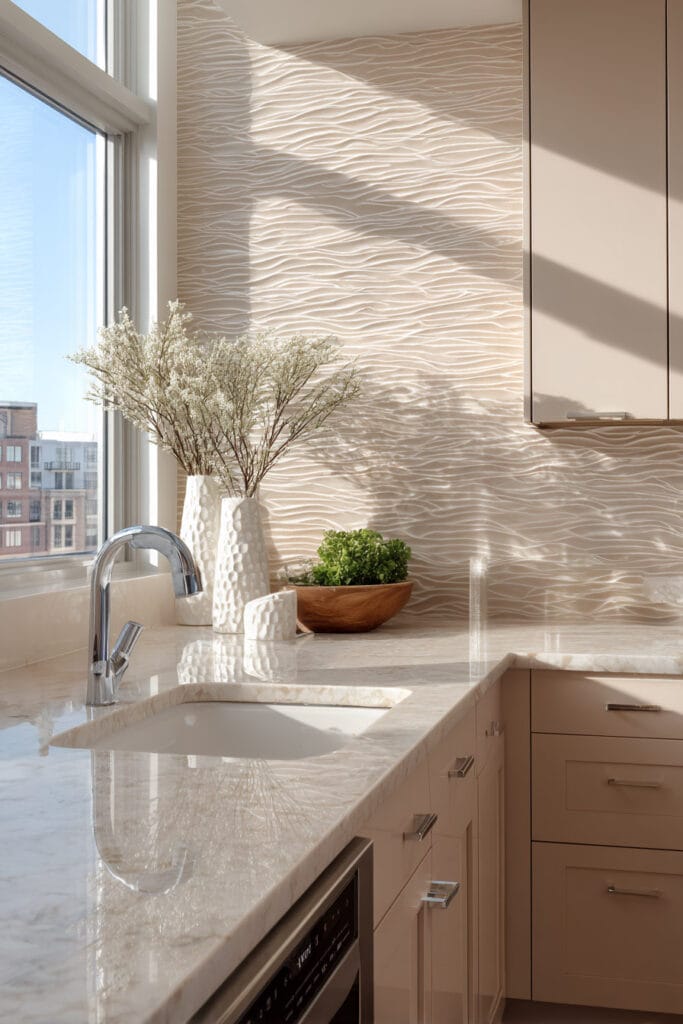
A softly sculpted wave backsplash brings movement and texture to this neutral kitchen without overpowering the space. The subtle relief catches natural light beautifully, adding depth while keeping the overall look calm and timeless.

Glossy subway tile adds gentle texture and light reflection while keeping this neutral kitchen feeling clean and timeless. The soft sheen creates depth without competing with the cabinetry or countertops, making it an easy way to introduce dimension in a subtle way.
Why Texture Is Replacing Color in Modern Kitchens
As bold color steps back, texture is taking center stage. Dimensional surfaces bring warmth, depth, and personality while still keeping spaces calm and livable.
From fluted stone to ribbed tile and sculpted backsplashes, this shift shows that great design doesn’t always need louder colors or more décor. Sometimes, the most compelling spaces are the ones where the materials themselves tell the story—making them just as satisfying to live in as they are to save on Pinterest.

A stacked stone backsplash brings depth and movement to this warm neutral kitchen, proving that texture can replace bold color while still feeling visually rich. The layered stone surface catches natural light beautifully, adding interest without disrupting the calm palette.

This neutral kitchen shows how dimensional surfaces can replace bold color by adding depth through texture instead. The fluted backsplash and stone island create subtle contrast while keeping the space calm, warm, and timeless.

This kitchen shows how layered materials like travertine, fluted wood, and natural stone can create interest without relying on bold color. The mix of subtle textures adds depth while keeping the space calm, warm, and effortlessly modern.