From Smooth to Sculpted: Why Dimensional Surfaces Are Everywhere Right Now
For a long time, smooth finishes were the safe choice. Flat cabinetry, glossy tile, seamless slabs—it all felt clean and modern. But lately, interiors have been shifting in a more tactile direction. Homes are craving warmth, depth, and character again, and that’s exactly where dimensional surfaces come in.
From sculpted backsplashes to fluted stone and ribbed cabinetry, texture is becoming one of the most defining elements in modern interiors. It adds interest without relying on bold color, which is why it’s showing up everywhere—from kitchens to bathrooms and beyond.
If you’ve been saving textured kitchens on Pinterest lately, you’re not alone.

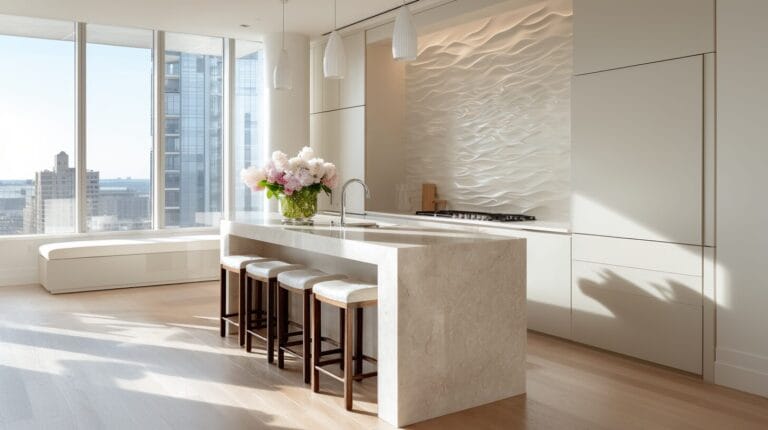
This kitchen shows how fluted surfaces can add depth and softness to a neutral design. The ribbed backsplash creates beautiful shadow and movement as natural light moves across the texture, while warm stone and wood tones keep the space feeling calm and organic. It’s a perfect example of how dimensional surfaces bring interest without needing bold color or heavy styling.
Why Flat, Perfect Surfaces Are Starting to Feel Dated
Flat finishes aren’t wrong—they just don’t do much anymore. As color palettes have softened and spaces have become more neutral, many interiors started to feel a little too quiet.
That’s where textured interior design steps in. Texture creates movement. It adds light and shadow. It gives a room something to say without overwhelming it. Even subtle dimension can make a space feel warmer and more lived-in, especially when everything else stays simple.
Instead of adding more décor, designers are letting the surfaces themselves do the work.

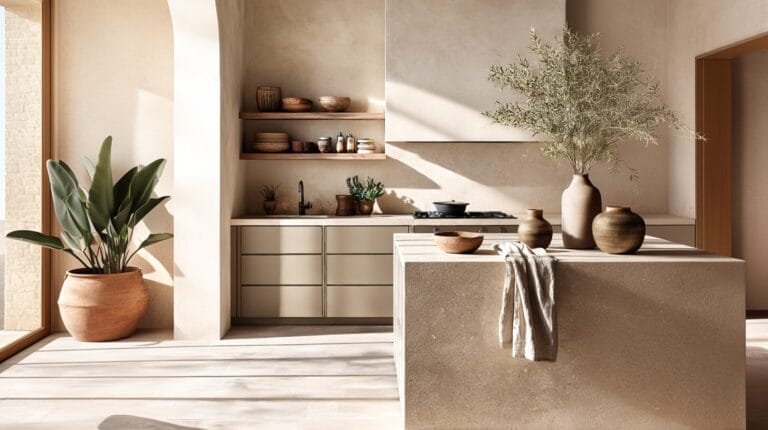
This kitchen highlights how subtle texture can completely transform a neutral space. The softly textured plaster-style backsplash and stone surfaces add depth and warmth while keeping the overall look calm and minimal. Natural light enhances the dimensional surfaces, creating a layered kitchen design that feels modern and inviting without relying on bold color.

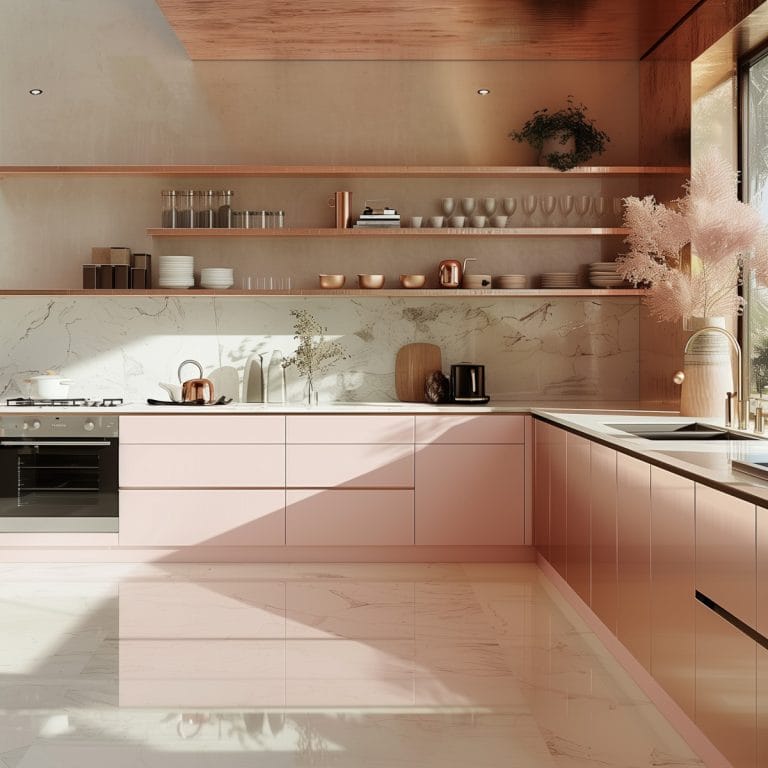
This kitchen reflects the clean, smooth finishes that defined earlier minimalist trends. Glossy cabinetry and flat surfaces create a sleek, polished look, while soft stone veining adds just a hint of texture. It’s a great example of how modern kitchens are shifting away from perfectly smooth finishes toward more dimensional surfaces and layered materials.

This kitchen shows how dimensional surfaces can bring warmth and depth into a modern space without relying on color. The textured stone backsplash and matte finishes create a layered, architectural look, while natural light enhances the richness of the materials. It’s a great example of textured kitchen design that feels grounded, calm, and timeless.
The Dimensional Backsplash: Today’s Most Eye-Catching Kitchen Feature
The backsplash has quietly become one of the most impactful design moments in the kitchen. A dimensional backsplash draws attention instantly, even in the most neutral spaces.
Textured tile or carved stone adds depth where you don’t usually expect it. Light hits raised surfaces differently throughout the day, which makes the kitchen feel more dynamic without feeling busy. It’s a small area with a big visual payoff—and one of the easiest ways to experiment with texture.

This kitchen highlights how a dimensional backsplash can completely transform a neutral space. The sculpted stone surface creates movement and shadow as natural light hits the texture, adding depth without introducing bold color. Paired with ribbed cabinetry and warm wood tones, the space feels layered, modern, and quietly luxurious.

This kitchen shows how a dimensional backsplash can become the main design feature without overpowering the space. The combination of fluted tile and natural stone creates movement and texture, while warm wood accents keep the look grounded and inviting. Natural light enhances the shadows between the ridges, highlighting the depth that makes textured kitchen design feel so elevated.

This kitchen shows how soft, layered textures can create depth while keeping the overall space calm and minimal. The stone backsplash and plaster-style wall introduce subtle dimensional surfaces that feel warm and timeless, especially when paired with natural wood cabinetry. Light moving across the textured finishes adds quiet movement, making the kitchen feel relaxed and thoughtfully designed.
Fluted Stone and Ribbed Tile Are the Texture Trends Pinterest Loves Most
If there’s one look dominating saved kitchen images right now, it’s fluted and ribbed surfaces. The fluted décor trend works because it feels architectural but still soft.
Vertical lines create rhythm and structure, while natural materials keep things warm and approachable. Fluted stone backsplashes and ribbed tile designs photograph beautifully, especially in bright kitchens with warm neutrals. They feel elevated without being flashy, which is exactly why Pinterest users can’t stop saving them.

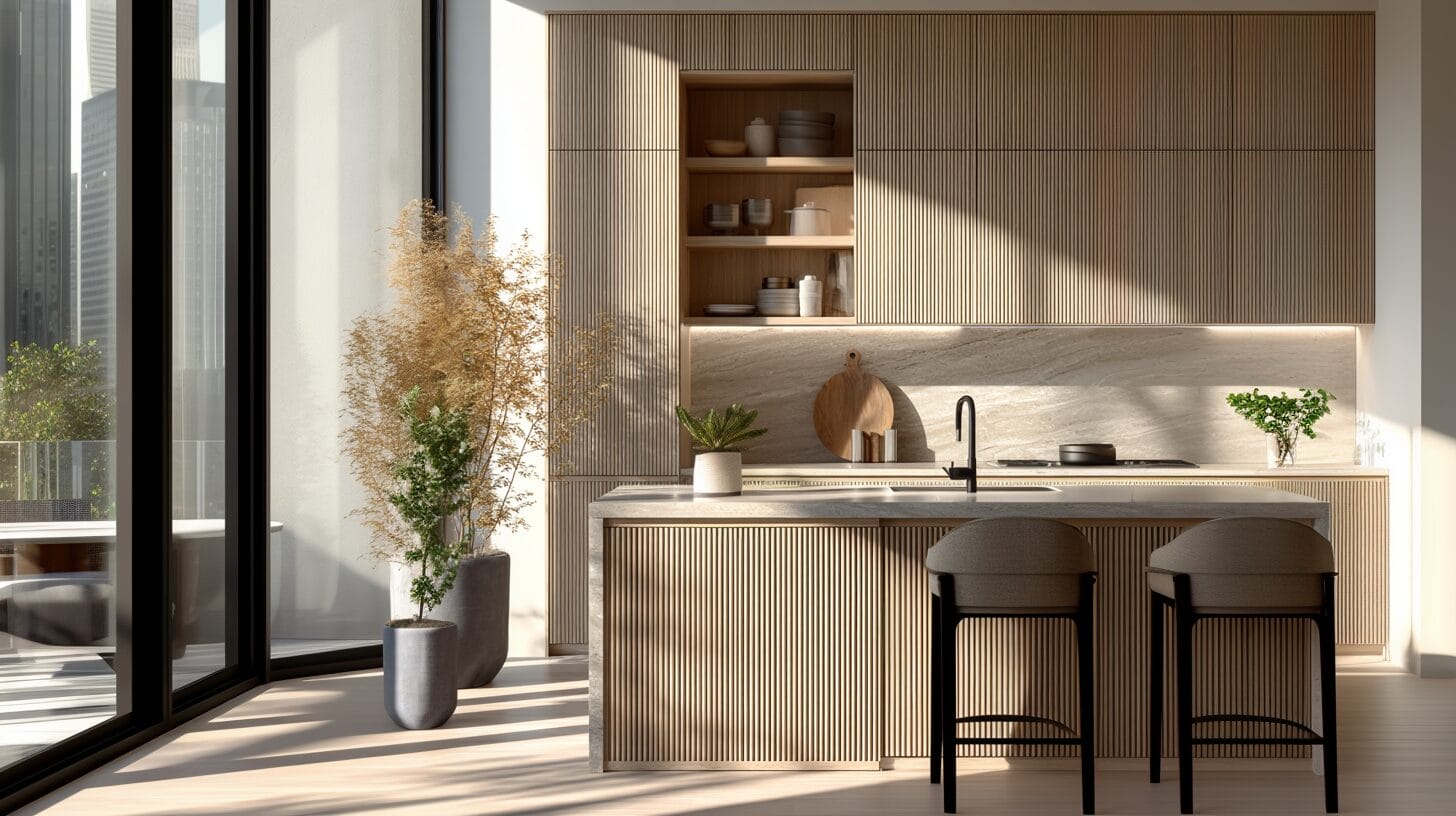
This kitchen captures how fluted and ribbed surfaces bring warmth and rhythm into modern kitchen design. The vertical texture of the cabinetry adds dimension while the stone backsplash keeps the palette calm and natural. Light moving across the grooves highlights the depth, showing why dimensional surfaces are becoming a defining kitchen trend.
Why Ribbed Cabinetry and Textured Backsplashes Work So Well Together
One of the most high-end ways to use this trend is by layering texture instead of color. Ribbed cabinetry paired with a dimensional backsplash adds depth without visual clutter.
When both elements stay within a similar tone—think soft beige, warm stone, or muted gray—the space feels intentional and cohesive. This kind of layered texture is a hallmark of modern textured interior design, especially in kitchens aiming for a calm but custom look.

This kitchen shows how ribbed cabinetry and textured surfaces work together to create depth without overwhelming the space. The vertical grooves add rhythm and movement, while the warm stone backsplash keeps the palette soft and cohesive. Natural light emphasizes the dimensional details, making the kitchen feel layered, modern, and inviting.
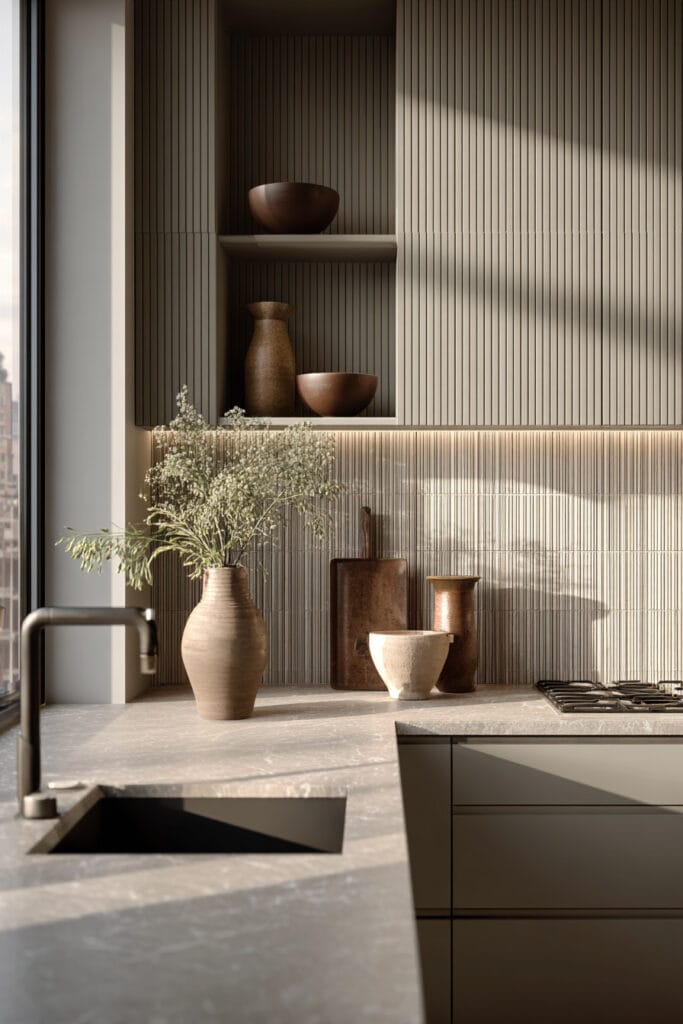
This kitchen shows how ribbed cabinetry and textured backsplashes create depth while still feeling calm and minimal. The vertical lines add subtle movement, and the warm neutral palette keeps the space soft and cohesive. Natural light highlights the grooves and shadows, showing why dimensional surfaces have become such a strong kitchen design trend.

This kitchen shows how dimensional surfaces can become the focal point of a modern space. Ribbed wood cabinetry adds warmth and texture, while the sculptural backsplash introduces movement and contrast without overwhelming the neutral palette. The combination creates a layered kitchen design that feels fresh, architectural, and very Pinterest-worthy.

This kitchen shows how dimensional surfaces can soften a bright, neutral space while adding architectural interest. Ribbed cabinetry and fluted paneling introduce texture that catches the light throughout the day, while natural stone keeps the overall look grounded and timeless. The layered materials create a warm, inviting kitchen that feels both modern and relaxed.
Subtle Texture Makes Neutral Kitchens Feel Anything but Boring
Not all dimensional surfaces are bold, and that’s what makes them so versatile. Softly sculpted tile, lightly fluted stone, or gentle plaster finishes add interest without stealing the spotlight.
These quieter textures are especially popular in minimalist and Scandinavian-inspired homes. They keep the space feeling serene while still adding warmth and depth. It’s proof that neutral kitchens don’t need contrast to feel inviting—just thoughtful surface detail.

This kitchen shows how subtle texture can make a neutral palette feel layered and inviting. The softly dimensional tile backsplash adds movement and depth while keeping the overall look light and calm. Paired with warm wood cabinetry and natural stone, the space feels timeless and easy to live in.

This kitchen shows how subtle texture can bring warmth and depth to a neutral design without overwhelming the space. The fluted backsplash creates gentle shadow and movement, while natural materials and soft tones keep the look calm and timeless. It’s a great example of how dimensional surfaces make minimalist kitchens feel more layered and inviting.

This kitchen shows how small-scale texture can quietly elevate a neutral design. The vertically textured backsplash adds depth and movement while blending seamlessly with warm stone and soft cabinetry tones. Natural light enhances the subtle dimensional surfaces, creating a kitchen that feels calm, layered, and easy to live with.
Organic vs. Graphic Texture: Two Totally Different Vibes
Texture isn’t one-size-fits-all. Some homes lean organic, others feel more architectural.
Organic textures—like hand-formed clay tile or natural stone—feel relaxed and imperfect. They bring warmth and softness. Graphic textures, such as sharply ribbed tile or precise fluting, feel more modern and structured. Both work beautifully; it really comes down to whether you want your space to feel earthy or refined.
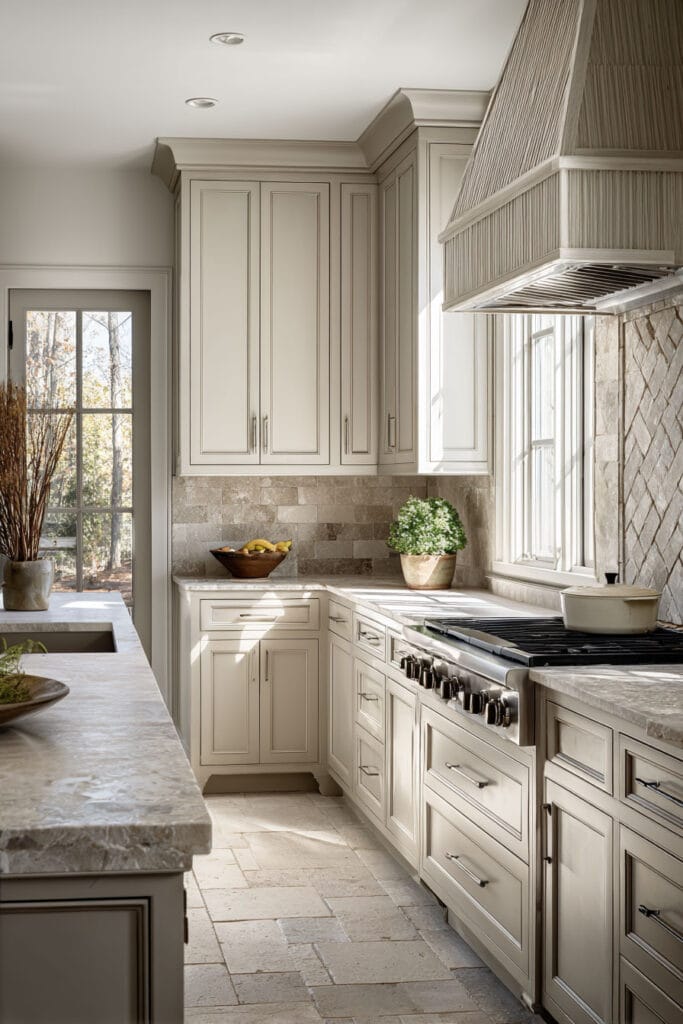
This kitchen shows how mixing organic and structured textures creates a space that feels layered but still timeless. The softly varied stone backsplash brings natural movement, while the fluted range hood introduces a more graphic, architectural texture. Together, the dimensional surfaces add depth without disrupting the calm neutral palette.

This kitchen highlights the balance between clean lines and dimensional texture. Ribbed cabinetry adds a graphic element, while the stone backsplash keeps the space grounded with natural variation and warmth. The contrast between smooth and textured surfaces creates a layered look that feels modern but still calm and livable.

This kitchen leans into organic texture with softly veined stone surfaces and subtle plaster-like finishes that add depth without visual noise. The layered neutrals and natural materials create a calm, sculptural look where texture replaces bold color. It’s a great example of how dimensional surfaces can make a minimalist kitchen feel warm and intentionally designed.
The Best Materials for Dimensional Backsplashes Right Now
Certain materials naturally shine when it comes to dimension. Sculpted stone, ribbed ceramic tile, handcrafted clay, and plaster-style finishes are all popular choices for textured backsplashes.
What makes these materials special isn’t color—it’s surface variation. Light catches differently across raised details, creating depth that changes throughout the day. That’s why dimensional backsplashes tend to feel timeless rather than trendy.

This kitchen shows how carved stone and layered detailing can turn a backsplash into a true focal point. The ornate range hood surround and textured stone surface add depth and character while keeping the palette soft and neutral. It’s a great example of dimensional surfaces bringing warmth and old-world charm into a timeless kitchen design.

This kitchen shows how vertical fluted tile can add quiet dimension without overpowering a neutral space. The soft stone tones, warm wood accents, and natural light highlight the texture beautifully, creating depth while keeping the overall look calm and minimal. It’s a great example of how subtle surface detail makes neutral kitchens feel layered and intentional.

This kitchen shows how stacked stone can bring natural depth and warmth to a neutral space without adding visual heaviness. The layered stone backsplash catches the light throughout the day, creating soft shadow and movement that makes the kitchen feel more organic and lived-in. Paired with warm wood tones and stone countertops, the texture adds interest while keeping the overall look calm and timeless.
Why Dimensional Surfaces Instantly Feel More High-End
Texture has long been used in custom and architectural design, which is why dimensional surfaces automatically feel elevated. They suggest craftsmanship and intention in a way flat finishes don’t.
Even a small dose—like a fluted backsplash behind the range—can make a kitchen feel more thoughtful and refined. When paired with simple styling and natural materials, the result feels quietly luxurious rather than overdesigned.

This kitchen shows how layered texture instantly elevates a neutral space, combining a softly veined stone backsplash with fluted cabinetry for subtle depth. The mix of smooth and ribbed surfaces catches natural light throughout the day, creating gentle shadows that make the kitchen feel warm, refined, and quietly high-end without relying on bold color or contrast.
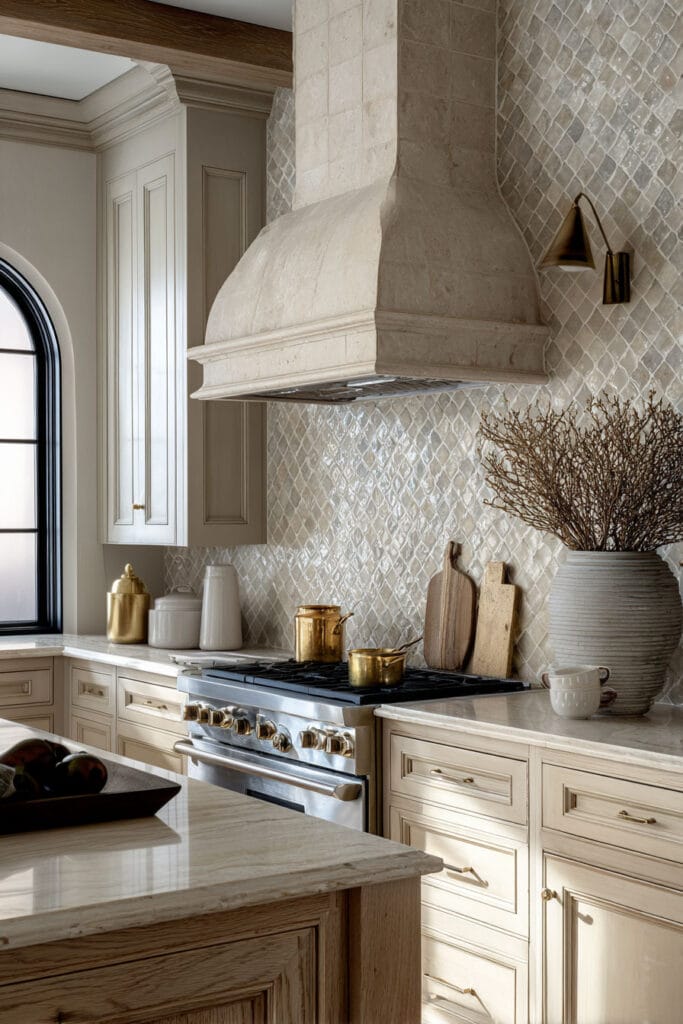
This kitchen highlights how dimensional tile and sculptural stone details bring quiet luxury into a neutral space. The softly reflective backsplash and carved range hood add depth and movement, allowing light to shift across the surfaces and making the kitchen feel layered, warm, and intentionally designed rather than flat or overly polished.
How to Add Texture Without Overdoing It
If you love the look but want to keep your space feeling balanced, start with one focal area. A textured backsplash, a ribbed island front, or a fluted accent wall can make a big impact on its own.
Keeping the color palette neutral lets the texture shine without overwhelming the room. This approach works just as well for small updates as it does for full renovations—and it’s an easy way to experiment with dimensional design in a timeless way.

This kitchen shows how dimensional surfaces can feel refined and understated when layered thoughtfully. The soft herringbone backsplash adds texture and movement without overpowering the space, while warm neutral cabinetry and stone countertops keep the overall look calm, balanced, and timeless.

This kitchen shows how mixing subtle textures can add depth without making a neutral space feel busy. The softly varied tile pattern brings quiet movement to the backsplash, while warm stone counters and simple cabinetry keep the overall look calm and cohesive.

This kitchen shows how soft, organic texture can make a neutral space feel layered without adding visual clutter. The plaster-style backsplash adds depth and warmth, while classic cabinetry and natural stone counters keep the overall look timeless and calm.
Texture Is the New Color in Modern Home Design
As bold color takes a back seat, texture is stepping forward. Dimensional surfaces bring depth, warmth, and personality to interiors while still feeling calm and livable.
From fluted stone to ribbed tile and sculpted backsplashes, this trend proves that sometimes the most beautiful designs are the ones you can feel as much as you can see. If you’re looking for a kitchen update that feels fresh, elevated, and endlessly save-worthy, texture is the place to start.

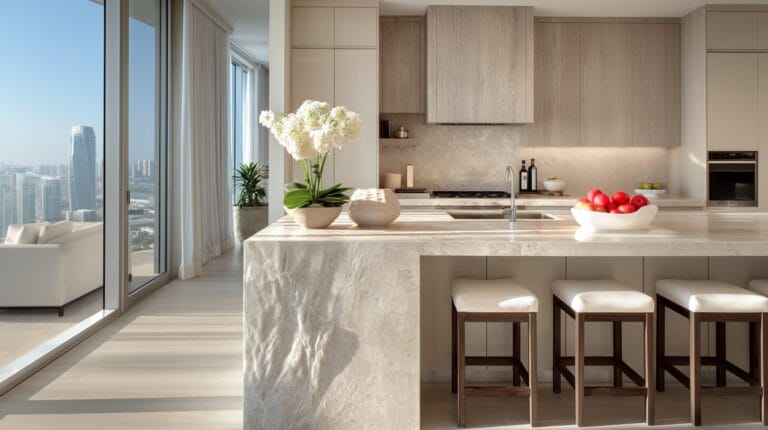
This kitchen shows how texture can take the place of bold color, using natural stone, warm wood, and layered finishes to create visual interest in a calm, neutral palette. The sculptural stone island becomes the focal point, while soft materials and natural light keep the space warm and inviting.

This kitchen shows how layered materials can create depth without relying on bold color, combining stone surfaces, warm wood tones, and subtle vertical texture for a calm but visually rich look. The tonal palette keeps the space feeling soft and cohesive while natural light highlights the dimensional surfaces throughout the design.

This kitchen shows how texture can carry an entire design, with fluted wood cabinetry and a softly veined stone backsplash creating depth without adding extra color. The warm neutral palette and clean lines keep the space calm while the dimensional surfaces add visual interest that feels modern and elevated.