Arches, Curves, and Scallops: Easy Ways to Soften a Room
Most rooms are built around straight lines. Walls meet at sharp corners, cabinets form neat rectangles, and sofas, rugs, windows, and artwork often repeat the same boxy shapes. Those clean lines can make a space feel orderly, but when there are too many of them, a room may begin to feel rigid, flat, or overly formal.
That is where arches, curves, and scallops can make such a difference.
Soft, rounded shapes give the eye somewhere new to travel. They break up hard edges, introduce a sense of movement, and help a room feel warmer and more welcoming. An arched doorway can add architectural character. A curved sofa can make a living room feel more relaxed. Even a small scalloped mirror or rounded lamp can soften an otherwise simple space.
You do not need to renovate your entire home or fill every room with wavy furniture. In fact, the most beautiful curved decor ideas usually rely on restraint. One larger curved feature, supported by a few smaller rounded details, is often enough to change the atmosphere of a room..
This same approach works especially well in a warm, understated home, where thoughtful shapes, textures, and colors do more of the decorating. These Color Palette Decor Ideas are a beautiful example of how a few carefully chosen elements can make a room feel softer and more cohesive.
From dramatic archways to renter-friendly painted details, here are easy ways to decorate with arches, curves, and scallops while keeping your home balanced, sophisticated, and timeless.
Understand Why Curves Make a Room Feel More Inviting
Straight lines give a room structure, while curved lines introduce softness. The contrast between the two is what makes an interior feel interesting and complete.
A round table placed in a rectangular dining room immediately breaks up the room’s sharp angles. A curved chair beside a linear bookcase creates a gentler, more comfortable composition. An arched mirror above a square console keeps the arrangement from looking too rigid.
Curves can also help a room feel more relaxed. Rounded furniture often appears less formal than furniture with sharp corners, while arches create a smooth transition from one space to another. Scallops add a lighter, more decorative touch without requiring bold color or pattern.
Think of soft shapes as a way to interrupt the room’s straight lines rather than replace them completely. The goal is not to make everything round. It is to create enough contrast that the room feels layered, thoughtful, and inviting.
Color can create that same sense of balance. If you want the room to feel warm without becoming busy, these Beautiful Color Palette Decor Ideas show how soft neutrals, earthy shades, and subtle contrast can work alongside curved furniture and decor.
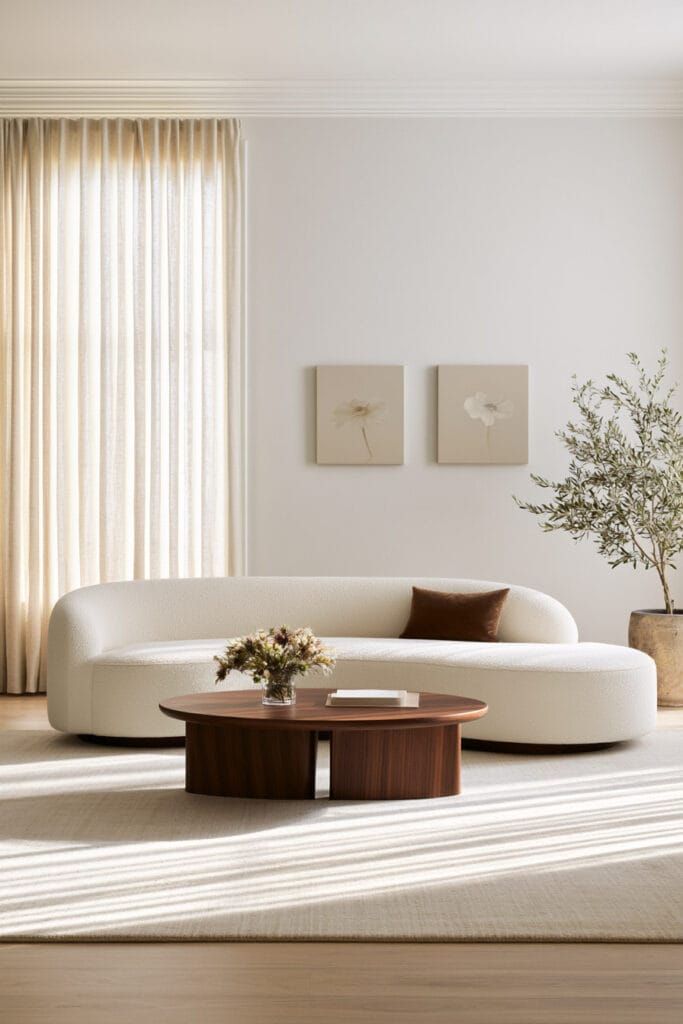
Bright, inviting living room with a sculptural curved cream sofa, rounded walnut coffee table, soft neutral rug, linen curtains, and an olive tree. The combination of sweeping furniture shapes and warm natural wood softens the clean, minimal room.
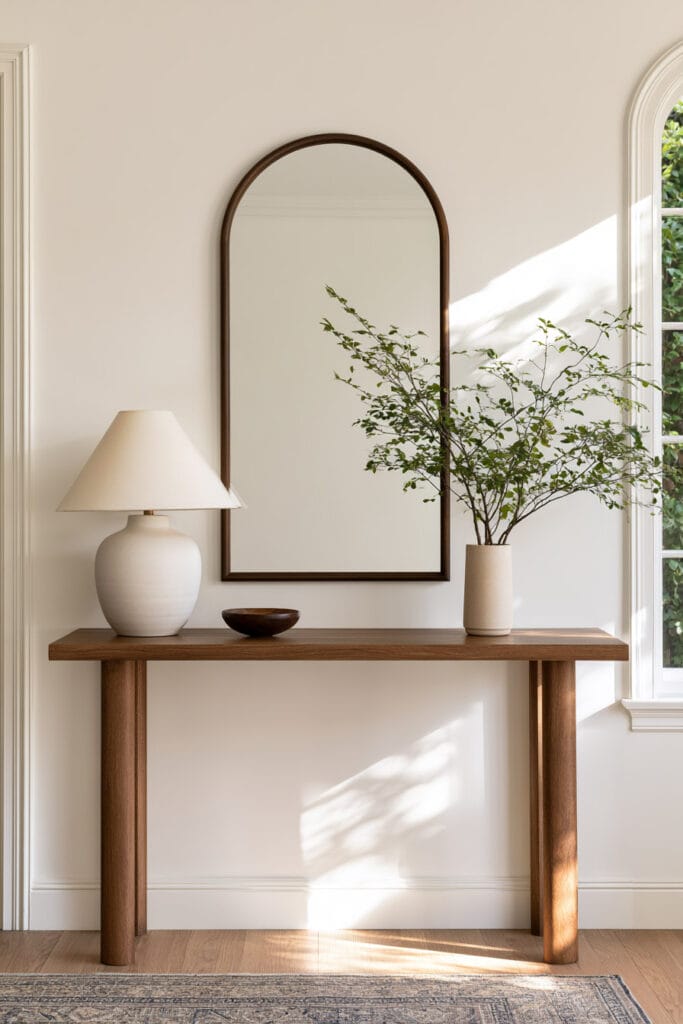
Warm, sunlit entryway featuring a tall arched wood mirror above a slim walnut console table, styled with a rounded ceramic lamp, sculptural bowl, and leafy branches. The repeated curves soften the simple lines of the console and give the space an inviting, timeless feel.
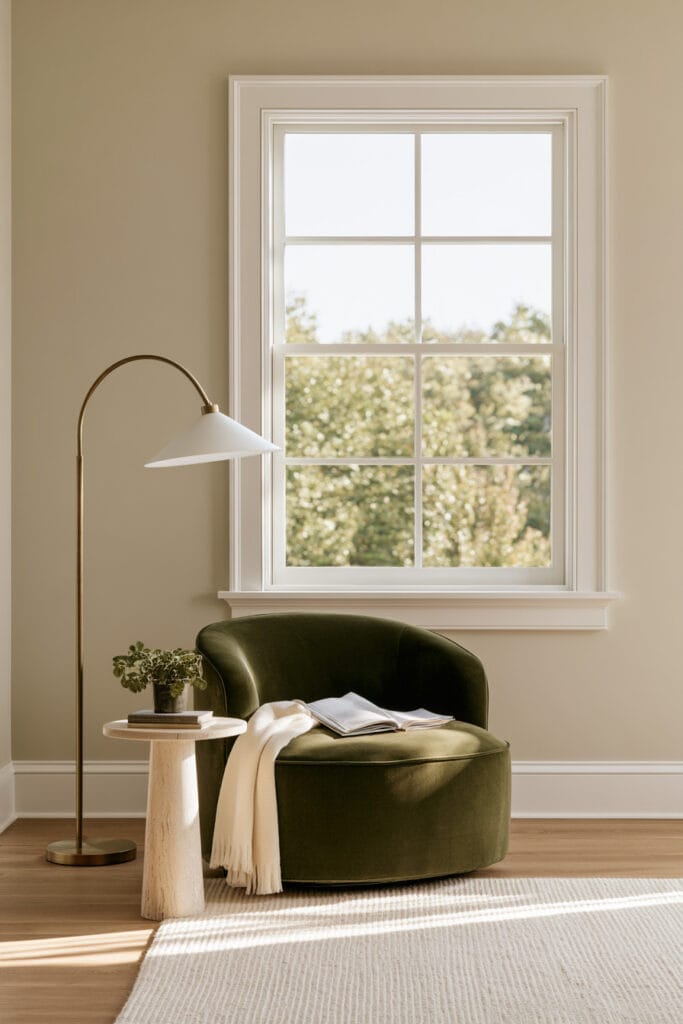
Cozy sunlit reading corner with a deep olive green curved chair, petite round stone side table, and graceful arched floor lamp. The soft silhouettes contrast beautifully with the straight window lines, creating a warm, comfortable space that feels polished without being formal.
Make an Arched Doorway the Focal Point
Few features add as much architectural character as an arched doorway. The rounded opening naturally draws attention, making it a beautiful focal point even in a room with very simple furniture.
A wide arch between a living room and dining room can make both spaces feel connected while still giving each area its own identity. A narrow hallway arch creates a sense of depth, especially when it frames a console, piece of artwork, or sunlit room beyond it. Repeating arches along a hallway can make an ordinary passage feel graceful and custom designed.
Arched doorways are especially beautiful when the surrounding materials remain simple. Warm white plaster, soft beige paint, natural wood, limestone, and terracotta allow the shape itself to stand out.
For a more modern look, keep the curve smooth and the walls uncluttered. For a Mediterranean or old-world feeling, pair the arch with textured plaster, aged wood, pottery, or warm iron details.
Arches look especially beautiful beside stone, plaster, and warm wood. For more ideas using those materials throughout an interior, see How Natural Materials Create a Calm, Timeless Home, which includes beautiful architectural details and naturally textured spaces.
The best arched doorway ideas do more than decorate an opening. They frame a view and create a moment of anticipation as you move from one room to the next.
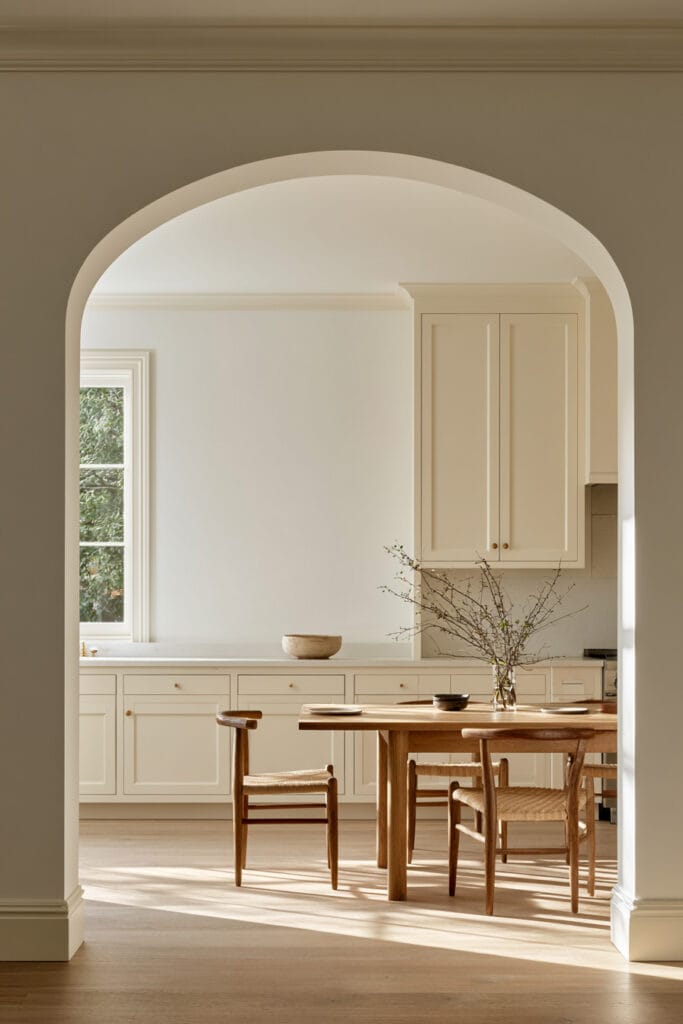
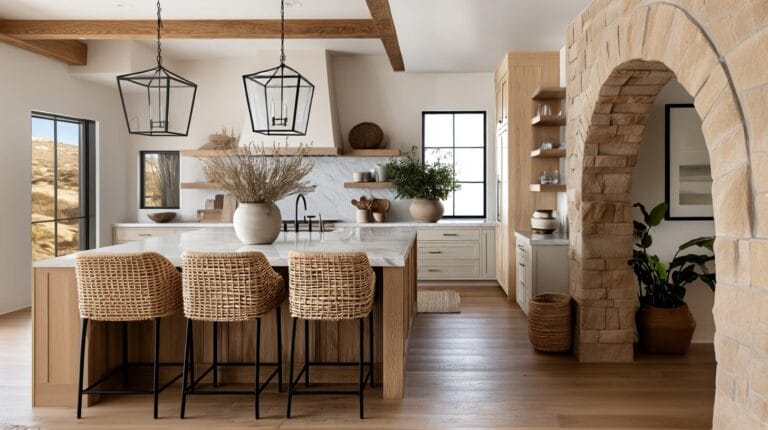
Beautiful arched doorway framing a warm, sunlit kitchen and dining space with natural wood furniture, creamy cabinetry, and soft neutral finishes. The oversized arch instantly softens the architecture and gives the simple room a graceful, timeless focal point.
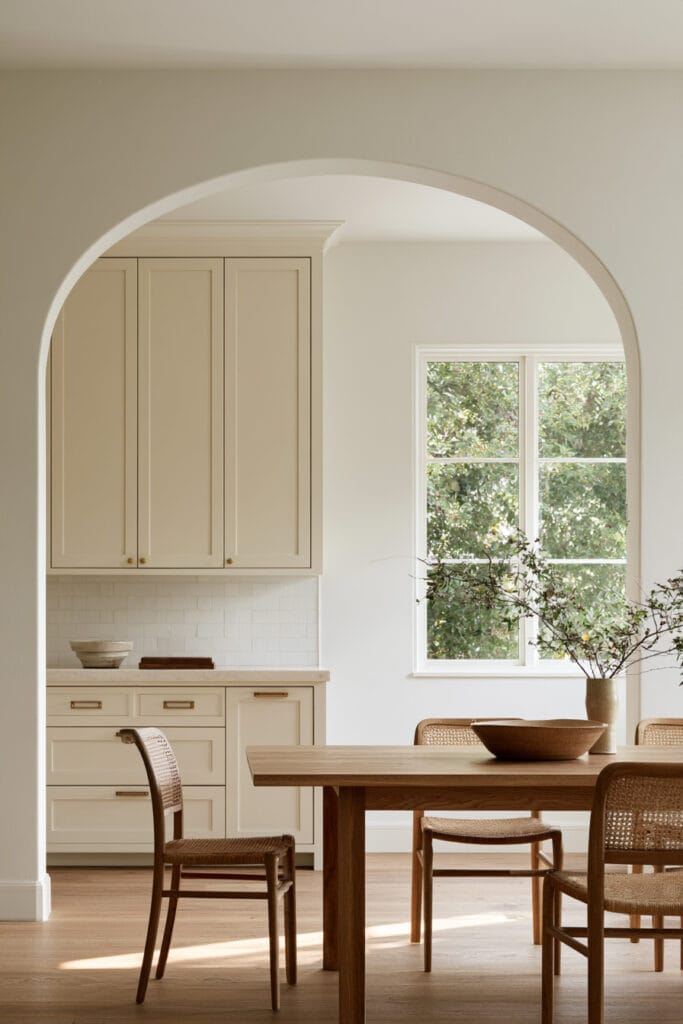
A wide arched doorway brings a soft architectural curve to this warm neutral kitchen and dining room. Cream cabinetry, natural wood, woven cane chairs, and abundant sunlight keep the space feeling relaxed and timeless. The simple arch creates a beautiful transition between rooms while showing how curved architectural details can soften straight lines and make an interior feel more inviting.
Add Character With Arched Niches and Built-Ins
You do not need to change the shape of a doorway to bring architectural curves into your home. Arched niches, bookcases, and built-ins can provide the same softness on a smaller scale.
A pair of arched bookcases beside a fireplace can make a living room feel balanced and beautifully finished. A recessed arch behind a console creates a natural place for art, lighting, or a vase of branches. In a kitchen or dining room, a small arched niche can display pottery, cookbooks, or handmade serving pieces.
These details are most effective when they are styled with restraint. Leave a little open space around each object so the shape of the arch remains visible. A few books, one ceramic vessel, and a small piece of art will often look more elegant than shelves filled from edge to edge.
Lighting can make an arched niche feel even more special. A small picture light, concealed shelf lighting, or a warm wall sconce emphasizes the curve and adds a soft evening glow.
Even a shallow niche can give a plain wall more dimension and make the room feel as though its details were carefully considered from the beginning.
If you like this softly architectural look, the Natural Materials Home Tour: Stone, Clay, and Wood in Every Room has more inspiration for arched niches, plaster walls, stone features, and built-ins that feel warm rather than overly formal.
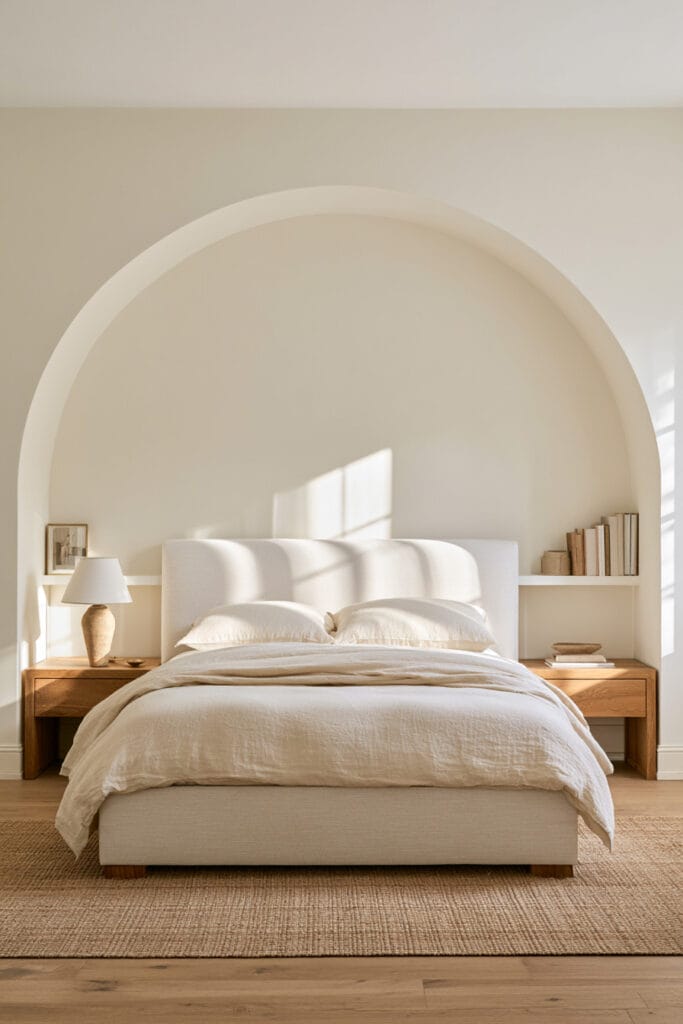
A dramatic arched wall niche frames this serene neutral bedroom, turning the bed into a beautiful architectural focal point. Soft cream bedding, warm wood nightstands, natural textures, and gentle sunlight keep the room feeling warm and inviting. The oversized arch adds character while softening the bedroom’s clean, straight lines.
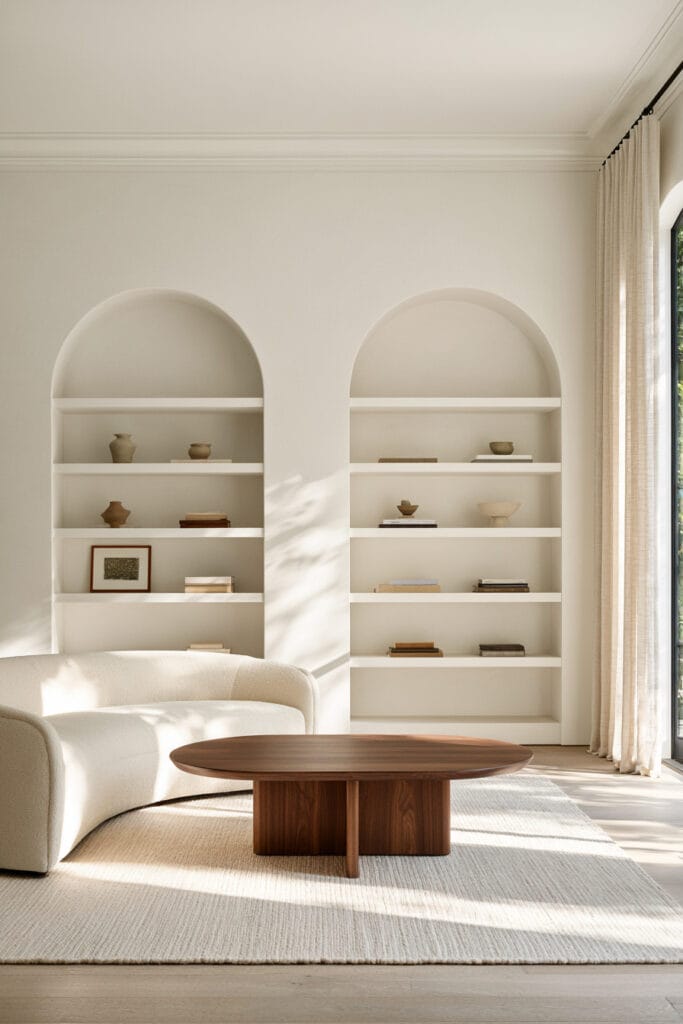
Curved decor can make even a simple neutral room feel more interesting. Arched doorways, rounded coffee tables, soft-edged furniture, and sculptural accessories add movement without making a space feel busy. This guide is perfect if you love warm, timeless interiors with a designer feel. Save your favorite ideas, follow for more inspiration, and click through to read the full post.
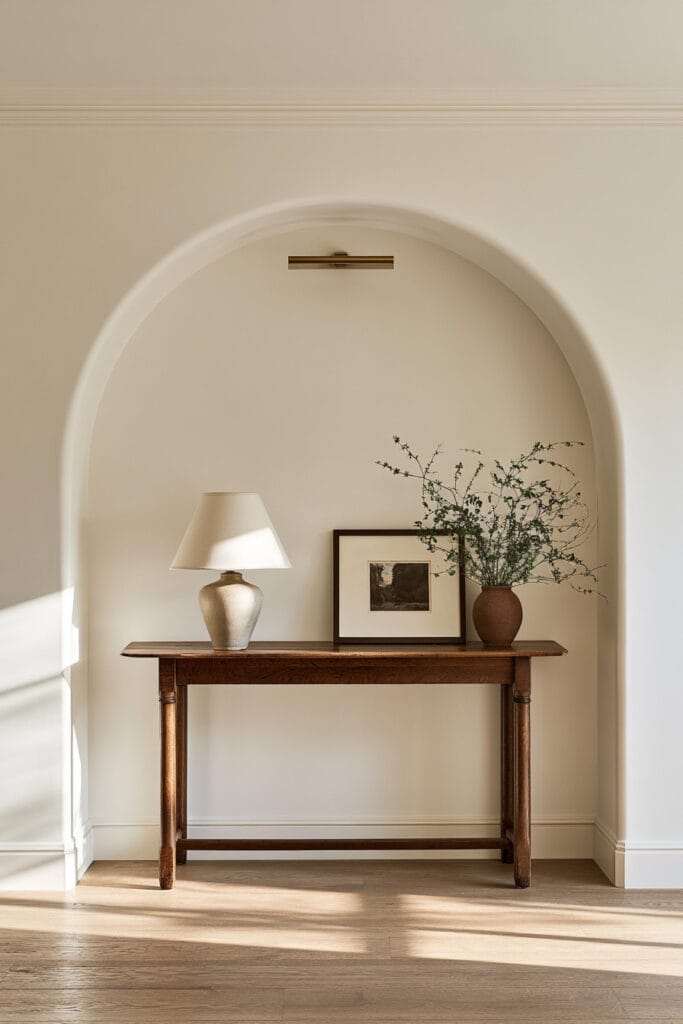
A graceful arched wall niche creates a beautiful focal point around a slim wood console table in this warm neutral interior. Simple pottery, framed art, greenery, and a classic table lamp add warmth without competing with the architecture. The curved niche softens the straight lines of the furniture and gives this simple space a more custom, collected feel.
Create a Painted Arch Without Renovating
A painted arch is one of the easiest ways to experiment with curved decor. It adds the suggestion of architecture without construction, making it especially useful for renters, small rooms, or budget-friendly makeovers.
Use a painted arch to frame a desk, reading chair, console, or bed. It can visually define a small area within a larger room while adding color and personality to a blank wall.
For a sophisticated result, choose a shade that relates to the rest of the room. Warm clay works beautifully with natural wood and cream upholstery. Olive green feels calm and grounded. Dusty blue, muted terracotta, warm beige, and chocolate brown can also create a soft focal point without overwhelming the space.
The size of the arch matters. A tall, generous shape usually looks more intentional than a small arch floating awkwardly in the middle of a wall. Allow it to extend slightly wider than the furniture it frames.
Removable wallpaper, peel-and-stick decals, or lightweight decorative molding can create a similar effect when painting is not an option. The idea is simple, but it can make a home office, bedroom, or reading corner feel far more finished.
Choosing the right paint color makes a painted arch feel much more intentional. These Color Palette Decorating Ideas can help you find warm neutrals, earthy colors, and softer accent shades that work beautifully for this kind of feature.
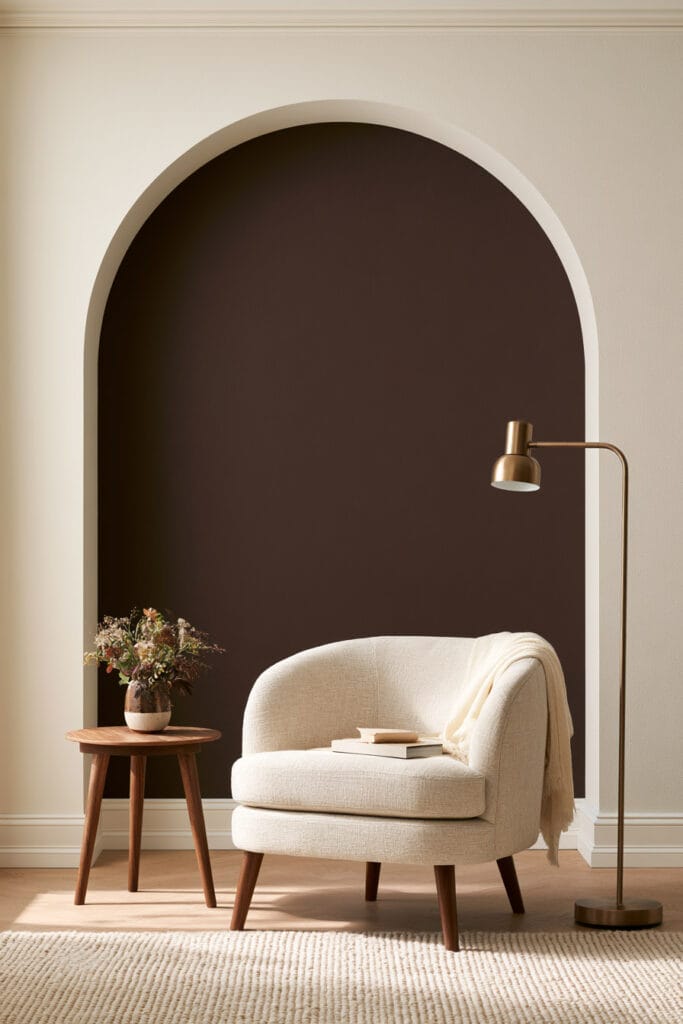
A deep chocolate brown painted arch creates a cozy reading nook without requiring architectural changes. The curved cream chair, round wood side table, and warm brass floor lamp echo the soft shape of the arch. This simple paint idea adds depth, contrast, and architectural character while making an ordinary corner feel intentional and inviting.
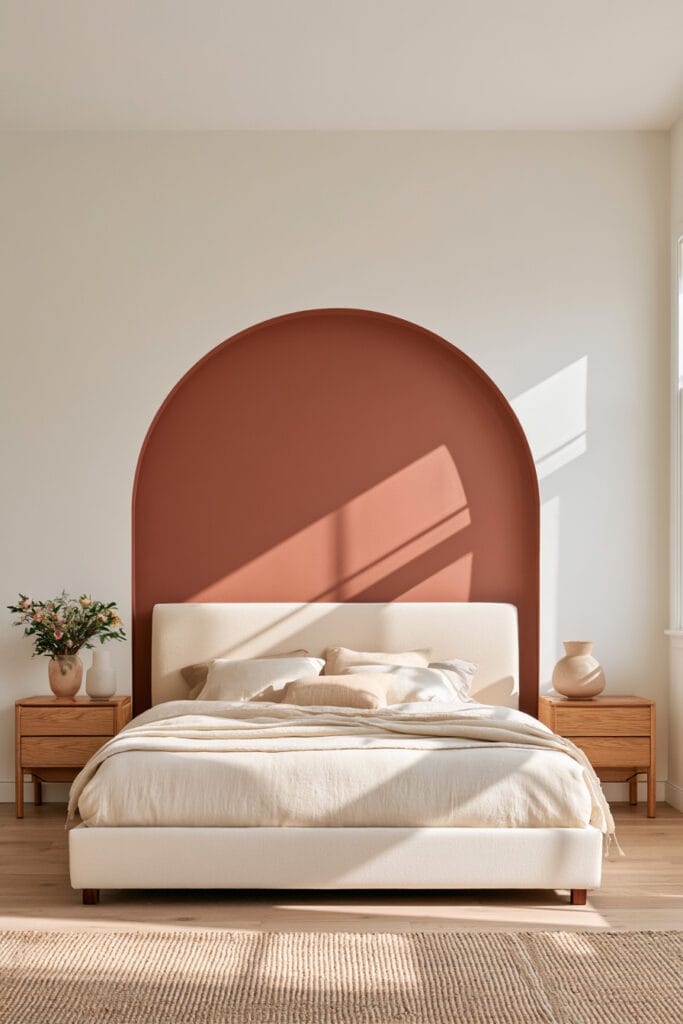
A warm terracotta painted arch creates a striking focal point behind this soft neutral bed. Cream bedding, light wood nightstands, simple pottery, and natural sunlight keep the bedroom feeling bright and relaxed. The rounded painted detail adds color and architectural softness without requiring a major renovation.
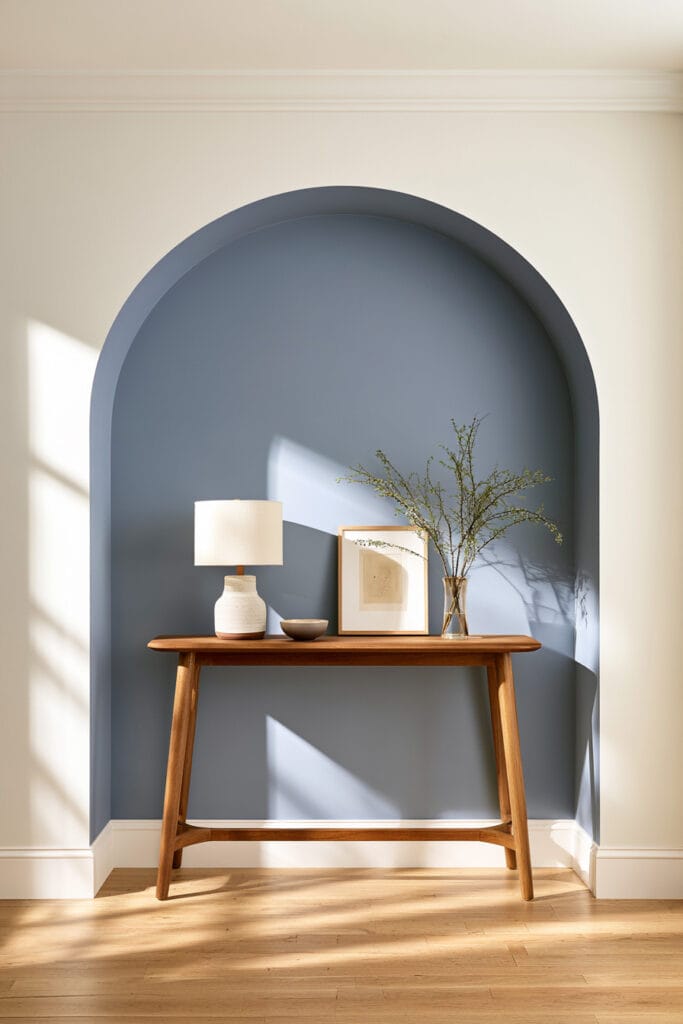
A soft blue painted arch turns a simple console area into an eye-catching architectural focal point. The warm wood table, ceramic lamp, framed art, and delicate greenery balance the cool blue with natural warmth. This easy paint treatment shows how an arched shape can add depth, character, and softer lines to a room without remodeling.
Use an Arched or Scalloped Mirror as a Statement Piece
Mirrors are one of the most practical ways to introduce softer shapes because they add both decoration and reflected light.
A tall arched floor mirror can make a bedroom or dressing area feel more spacious. A pill-shaped mirror brings a cleaner, more modern curve to a bathroom. In an entryway, a scalloped mirror adds personality above a simple console without requiring a large collection of accessories.
The material of the frame can help the mirror suit the style of your room. Thin brass feels polished and elegant. Black metal adds modern contrast. Warm wood works beautifully in traditional and organic interiors, while rattan creates a more relaxed, natural look.
Because scalloped mirrors already have a decorative outline, they usually look best against a relatively quiet background. Pair one with a streamlined console, simple lamp, and a single vase rather than several competing accessories.
An arched or scalloped mirror is also an excellent choice for a room that feels too rectangular. Entryways are one of the easiest places to try this idea. You’ll find more inspiration for mirrors, consoles, natural wood, and softly styled entrances in these Sage Green Entryway Ideas That Feel Inviting and Timeless. It introduces a strong new shape while still remaining useful, timeless, and easy to move from one space to another.
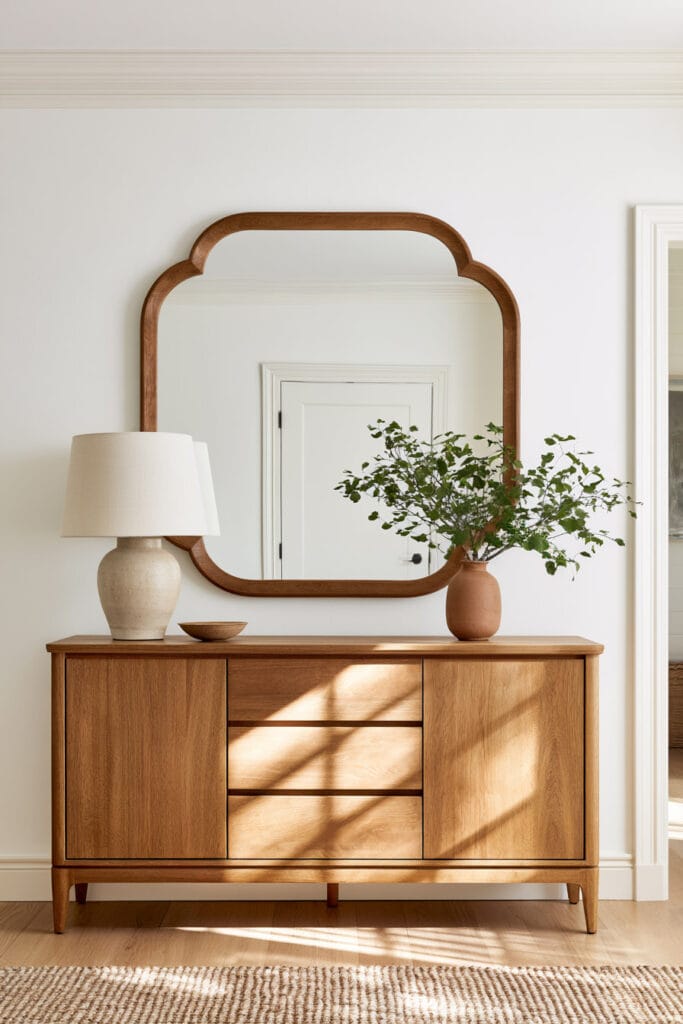
A shapely wood-framed mirror adds soft curves and a subtle scalloped look above this warm wood console. Its decorative silhouette breaks up the straight lines of the furniture while a ceramic lamp, terracotta vase, and leafy branches add natural texture. This is an easy way to introduce curved details without changing the architecture of a room.
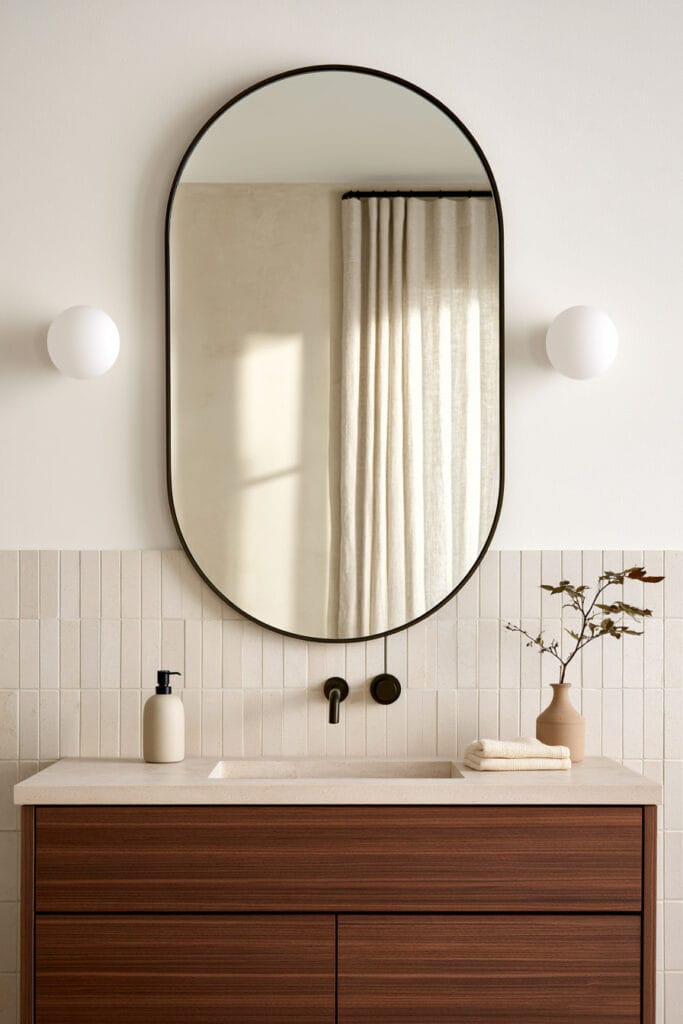
A tall arched mirror brings a graceful curve to this warm, minimalist bathroom. The rounded mirror and globe sconces soften the strong lines of the dark wood vanity and vertical tile, while creamy neutrals and natural textures keep the space calm and inviting. It’s a simple way to add curves to a bathroom without changing the architecture.
Introduce One Curved Sofa or Rounded Accent Chair
Curved seating can instantly change the mood of a living room. Instead of creating a formal line across the space, a rounded sofa or chair seems to invite people inward.
A gently curved sofa works especially well in a larger living room where it can float away from the wall. Its shape creates a natural conversation area and can help the furniture arrangement feel less predictable. In a smaller room, a barrel chair, rounded swivel chair, or upholstered bench may provide the same softness without taking up as much space.
Choose one primary curved seating piece and allow it to be the focal point. It does not need to be paired with another curved sofa, several round chairs, and multiple wavy tables. A curved cream sofa can look striking beside a rectangular rug and simple linear shelving. A chocolate-brown barrel chair can soften a bedroom corner while still feeling grounded and sophisticated.
Texture also matters. Bouclé, linen, velvet, and softly woven upholstery emphasize the comfortable quality of the shape. Keep the surrounding palette calm so the silhouette remains the most memorable part of the room.
If you love living rooms that feel soft and relaxed rather than stiff, these Sage Green Living Room Ideas are full of warm seating arrangements, natural textures, and cozy color combinations that pair beautifully with rounded furniture.
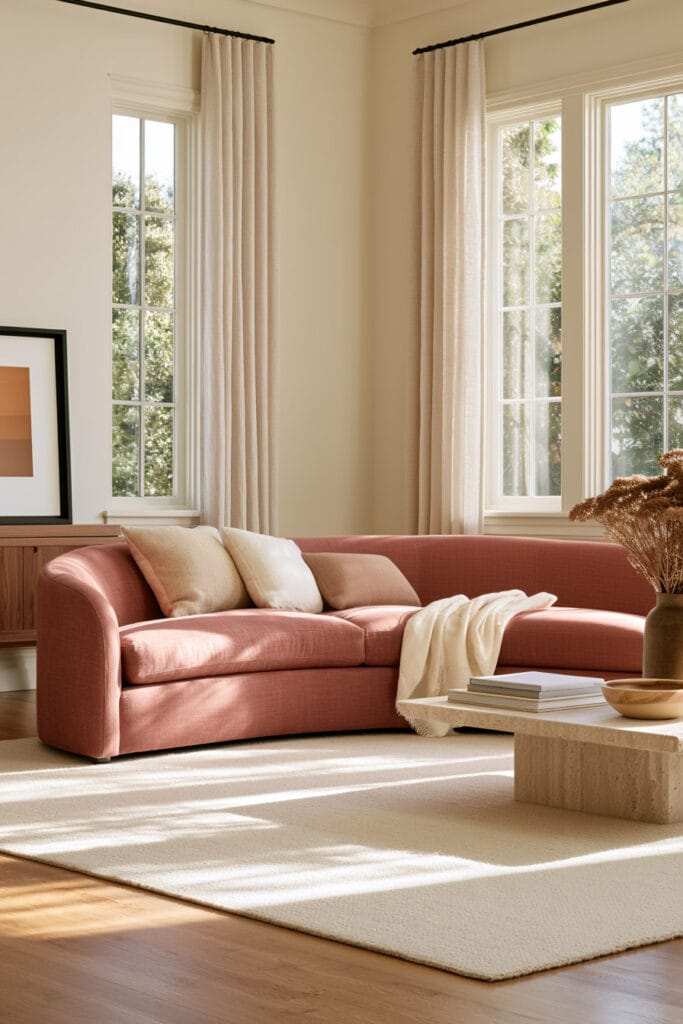
A softly curved dusty rose sofa brings warmth and graceful movement to this bright living room. Its rounded back and arms soften the straight lines of the tall windows, wood cabinetry, and stone coffee table. Cream pillows, a neutral rug, and warm natural light keep the colorful sofa feeling sophisticated and easy to live with.
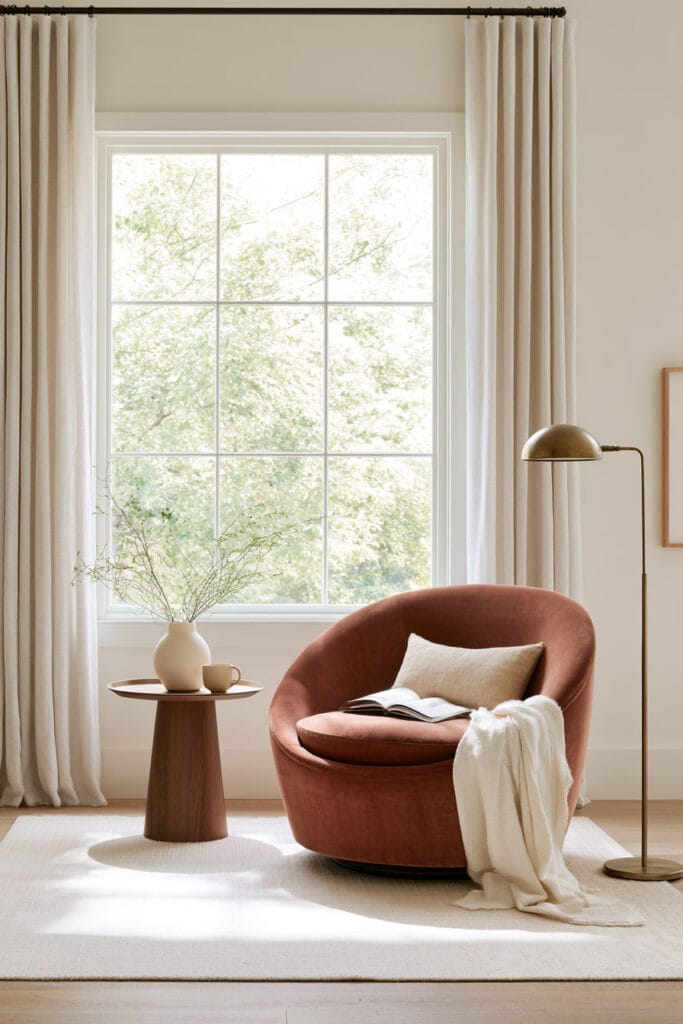
A rounded rust-colored accent chair creates a cozy focal point in this bright, neutral reading corner. Its enveloping curved shape contrasts beautifully with the straight window lines and flowing cream curtains. A round wood side table, brass floor lamp, soft throw, and natural light make the space feel warm, relaxed, and inviting.
Replace Boxy Tables With Round, Oval, or Organic Shapes
Tables are an easy place to trade sharp corners for softer lines.
A round pedestal table can make a breakfast nook feel intimate and welcoming. An oval coffee table allows for easier movement around a seating area, especially in a narrow living room. Rounded nightstands can soften the sides of a large bed, while drum-shaped accent tables add a simple sculptural element beside a chair.
Organic-shaped tables offer a slightly less formal alternative to perfect circles and ovals. Look for gently irregular stone, wood, or plaster surfaces that feel inspired by shapes found in nature.
These forms are particularly helpful in compact spaces. Without pointed corners extending into walkways, the room can feel easier to move through. A round dining table may also fit more naturally into a square room than a long rectangular table.
To keep the look balanced, pair a rounded table with chairs or sofas that have some structure. A round oak dining table with tailored upholstered chairs feels softer without becoming overly playful. An oval coffee table on a rectangular rug creates the same appealing contrast.
Organic shapes look particularly beautiful when they are paired with stone, clay, and warm wood. A Home Filled With Natural Materials: Stone, Clay, and Wood in Every Room has more ideas for bringing those softer, nature-inspired forms into everyday spaces.
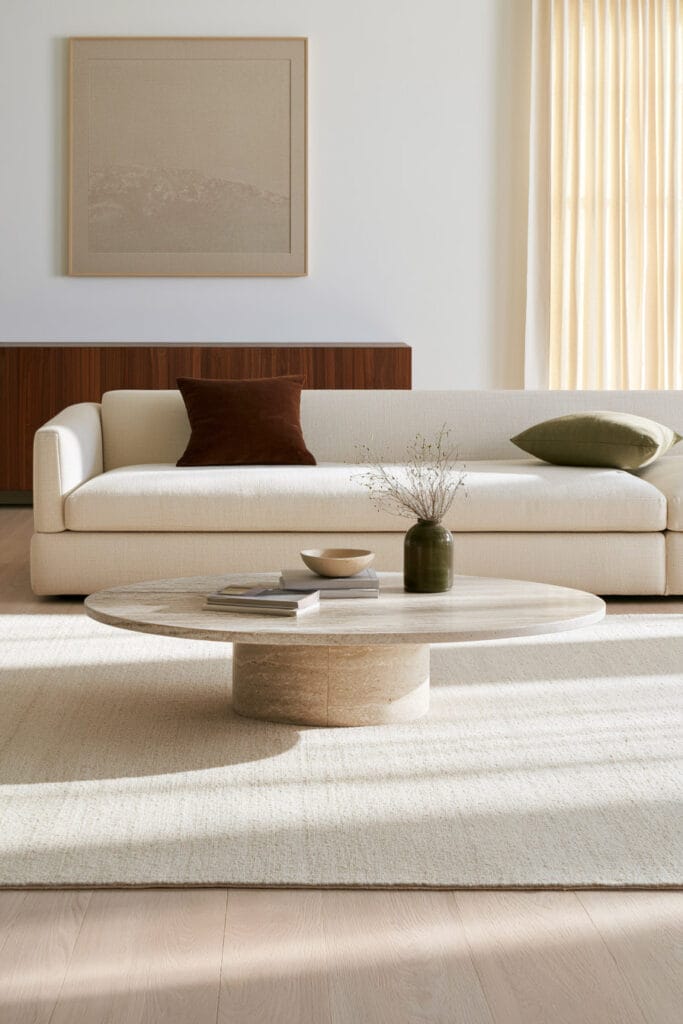
A large round stone coffee table brings a soft, sculptural shape to this warm neutral living room. Its curved edge beautifully contrasts with the clean-lined cream sofa and wood cabinetry, while earthy brown and olive accents add subtle warmth. The simple mix of straight and rounded forms makes the room feel balanced, modern, and inviting.
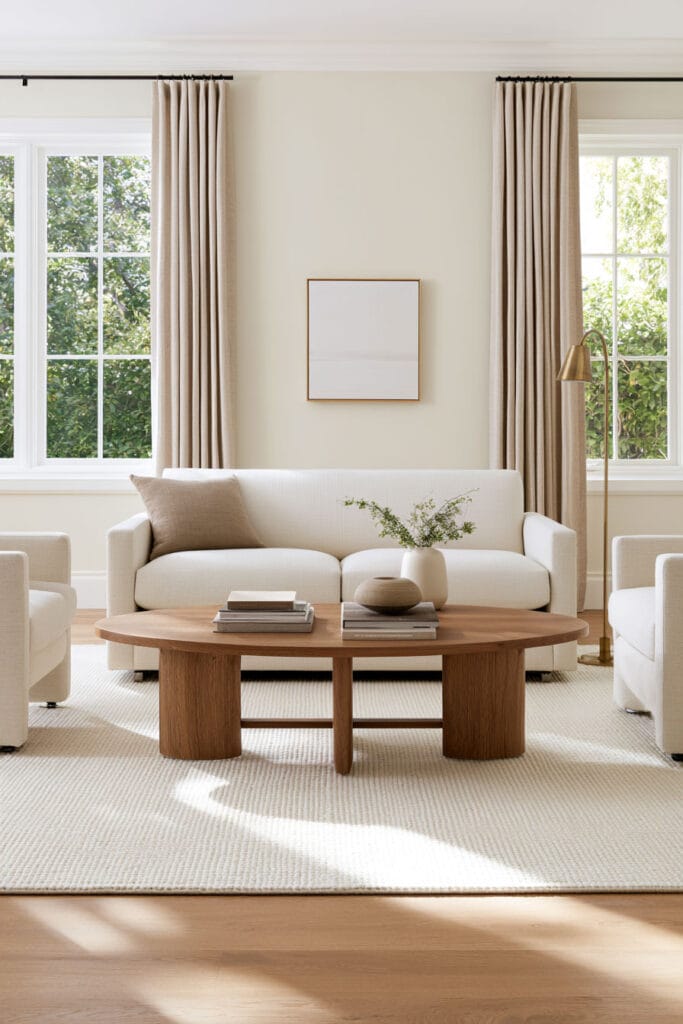
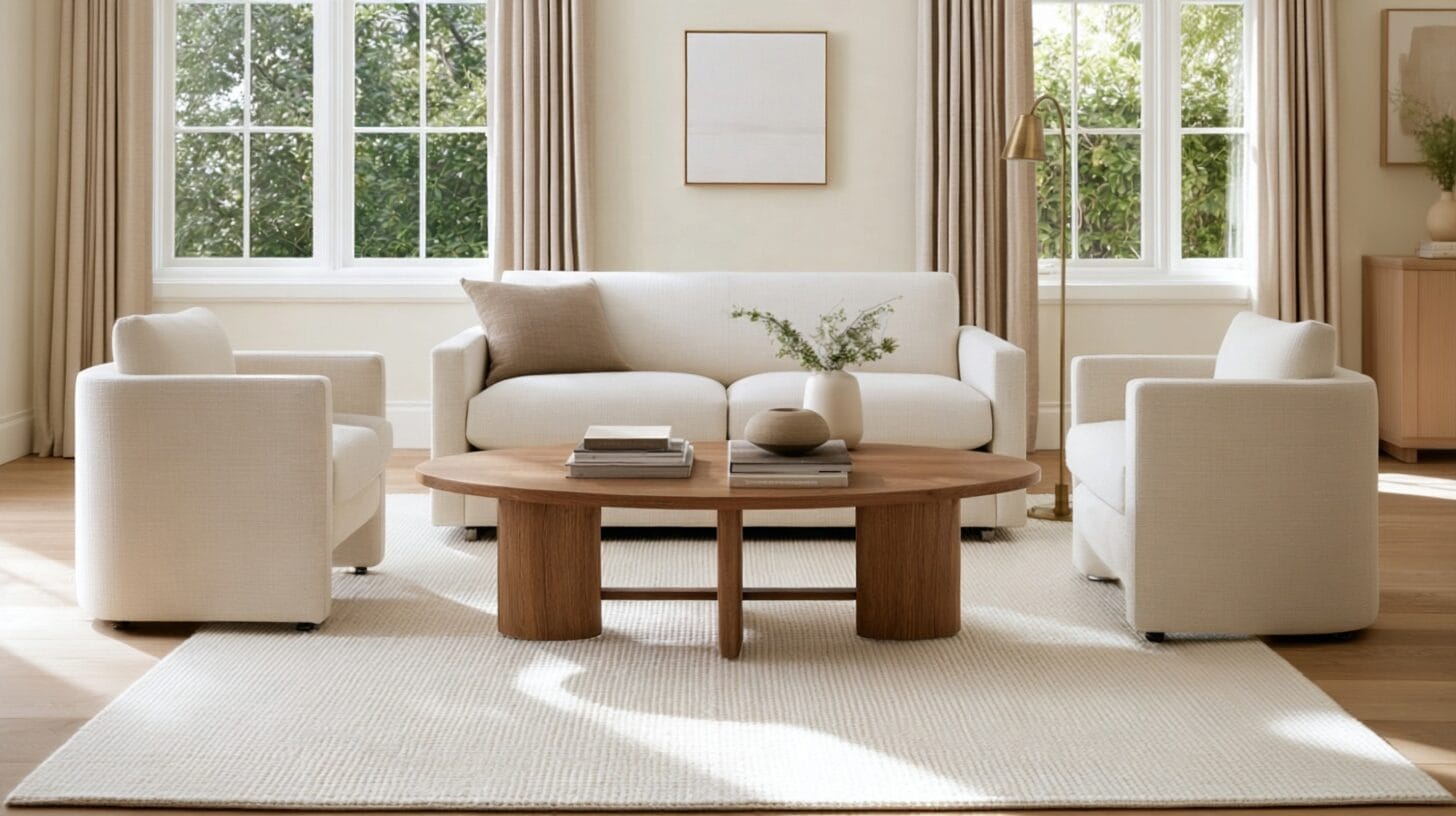
A large oval wood coffee table adds warmth and gentle curves to this bright neutral living room. Its rounded edges soften the straight lines of the cream sofa, armchairs, windows, and curtains while keeping the room clean and sophisticated. Natural wood, soft textiles, and simple decor create an inviting balance of curved and structured shapes.
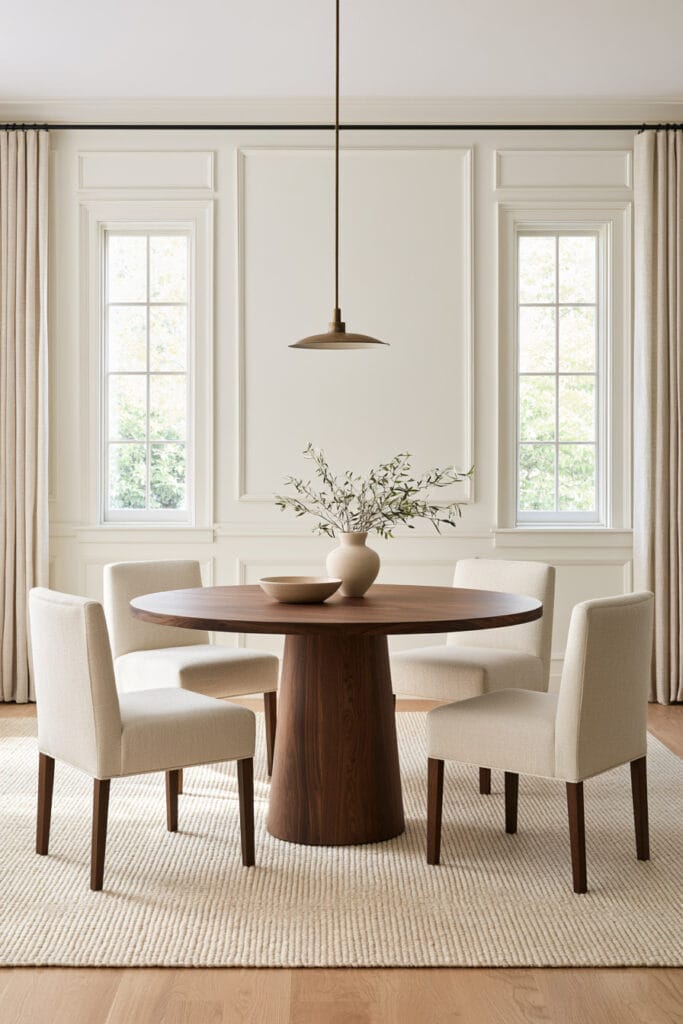
A round wood pedestal table introduces a strong, graceful curve into this elegant neutral dining room. Cream upholstered chairs, soft linen curtains, and classic wall molding balance the rich wood beautifully. The circular table breaks up the room’s many straight architectural lines, making the space feel softer, warmer, and more inviting.
Soften a Kitchen With a Curved Island or Arched Hood
Kitchens naturally contain a great deal of geometry. Rows of cabinets, rectangular appliances, tiled backsplashes, and long countertops can make the room feel highly linear. One curved feature can soften all of those straight lines.
A rounded kitchen island creates a beautiful focal point while making the edges feel less severe. Curved ends are especially useful near walkways because they allow movement to flow more naturally around the island. Fluted wood, plaster, or softly veined stone can make the shape feel even more sculptural.
An arched range hood is another striking option. Finished in warm plaster, limewash, or simple painted wood, it can introduce architectural softness without taking over the entire kitchen.
Smaller details can create a similar effect. Consider an arched pantry door, rounded open shelves, dome pendant lights, circular barstools, or cabinets with gently curved corners. A scalloped café curtain can bring charm to a kitchen window without requiring any permanent changes.
Because a curved island or arched hood already makes a strong statement, keep the surrounding cabinetry relatively simple. Light counters, warm wood, and understated hardware will allow the feature to feel elegant rather than overly decorative.
For more ways to combine warmth with clean kitchen lines, see the Kitchen Trends Pinterest Is Loving Right Now—and Why They’re Timeless. Warm wood, stone, plaster, and softer silhouettes all help a kitchen feel less rigid.
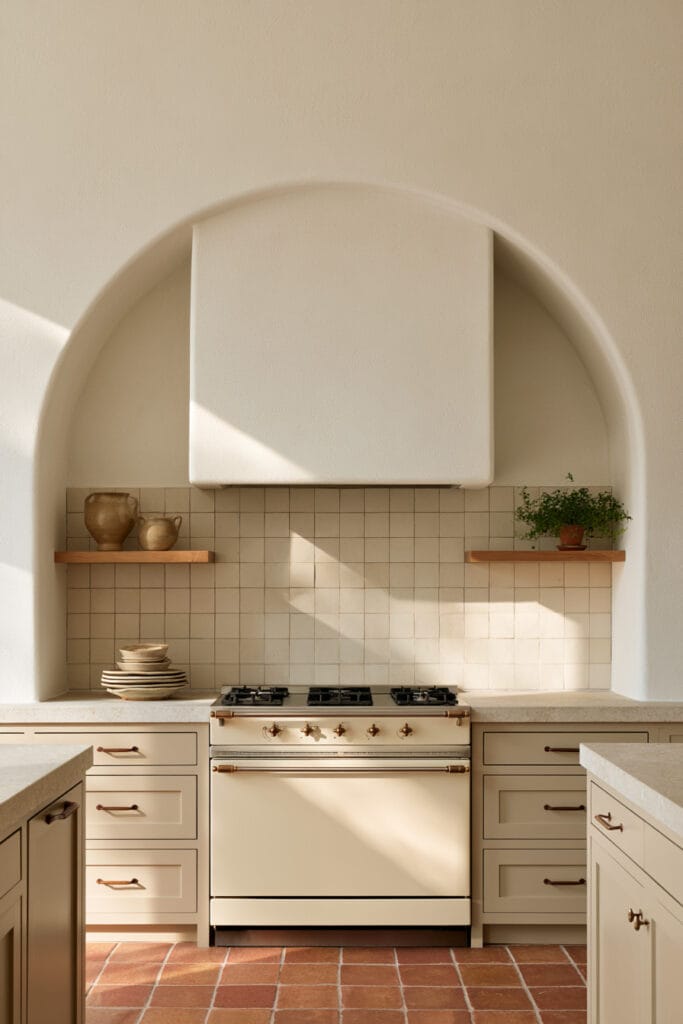
A large arched alcove frames the range and hood, bringing a beautiful architectural curve to this warm neutral kitchen. Cream cabinetry, handmade-look tile, wood shelves, and terracotta flooring add natural warmth and texture. The oversized arch softens the many straight lines of the cabinets and counters while creating an eye-catching focal point.
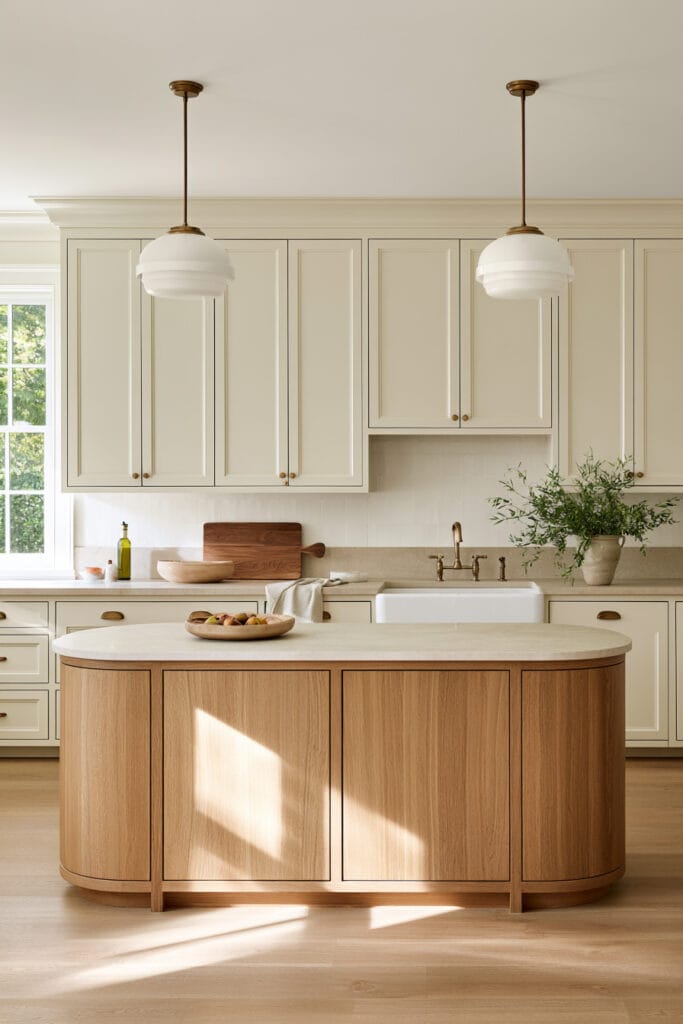
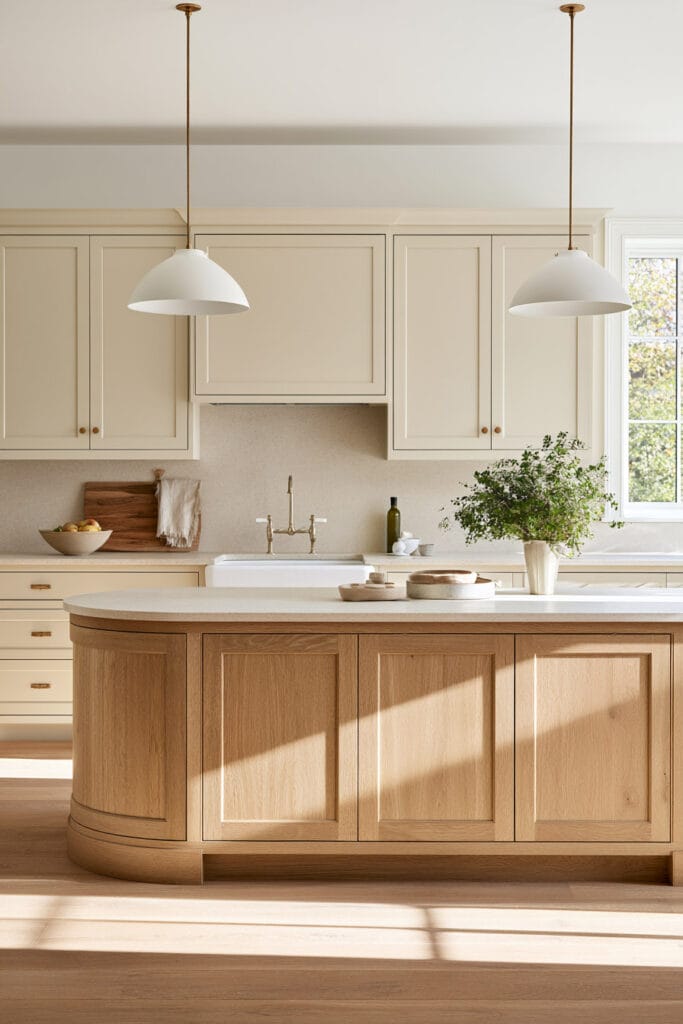
A curved wood kitchen island brings warmth and graceful movement to this bright cream kitchen. Rounded ends soften the straight lines of the surrounding cabinetry, while a pale stone countertop, globe pendant lights, warm brass details, and natural wood create an elegant, timeless look. The gentle curves make the kitchen feel softer and more inviting.
Bring Arches and Scallops Into the Bathroom
Bathrooms are filled with hard materials and straight edges, which makes them an ideal place for soft shapes.
An arched shower opening can transform a basic walk-in shower into a dramatic architectural feature. The curve looks especially beautiful when finished in warm white tile, natural stone, or textured plaster. An arched shower niche can add a smaller version of the same idea.
Mirrors provide another easy opportunity. A pill-shaped mirror above a rectangular vanity introduces contrast, while globe sconces placed on either side repeat the rounded silhouette. For something more decorative, a scalloped mirror or vanity skirt can add character to a powder room.
Scalloped tile can also bring movement to a bathroom, but it does not need to cover every wall. Use it behind the vanity, inside the shower, or as a small border. Pair it with quieter surfaces so the pattern remains special.
Rounded vessel sinks, curved vanities, freestanding tubs, and fluted cabinet fronts can all soften the room. The key is to select one or two of these features rather than layering every option into the same space.
Soft color can make those curves feel even more calming. These Sage Green Bathroom Ideas show how rounded mirrors, warm wood vanities, stone, and muted green tones can create a bathroom that feels relaxed and timeless.
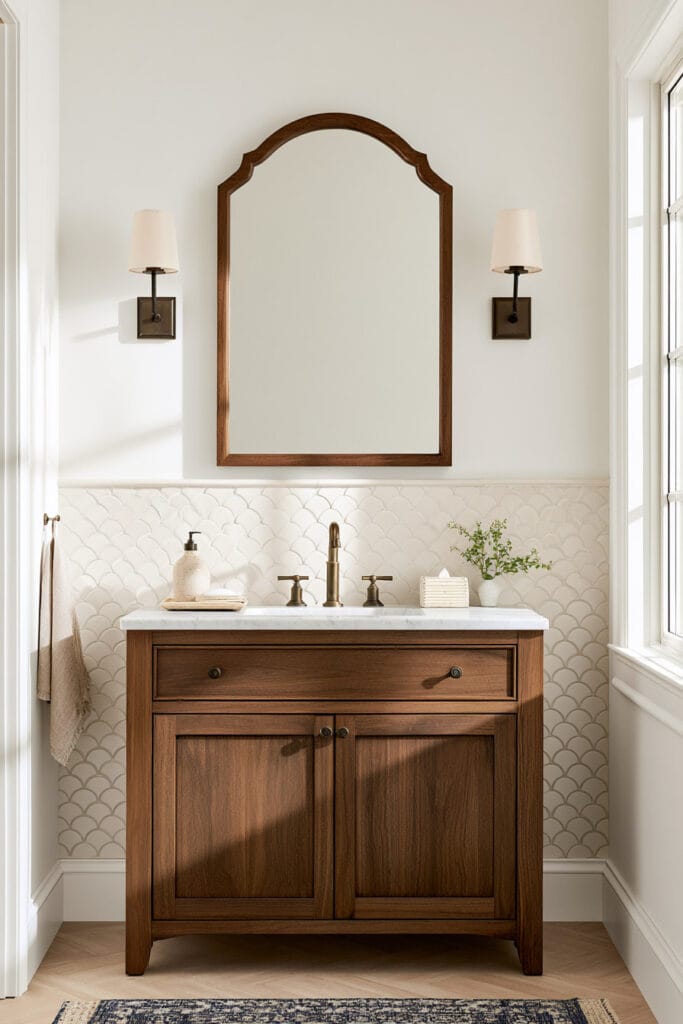
A shapely arched wood mirror and scalloped tile bring soft curves to this warm, timeless bathroom. The repeating scallop pattern beautifully contrasts with the straight lines of the rich wood vanity, while warm metal fixtures and creamy neutrals keep the space elegant. It’s a beautiful example of layering curved details without overwhelming the room.
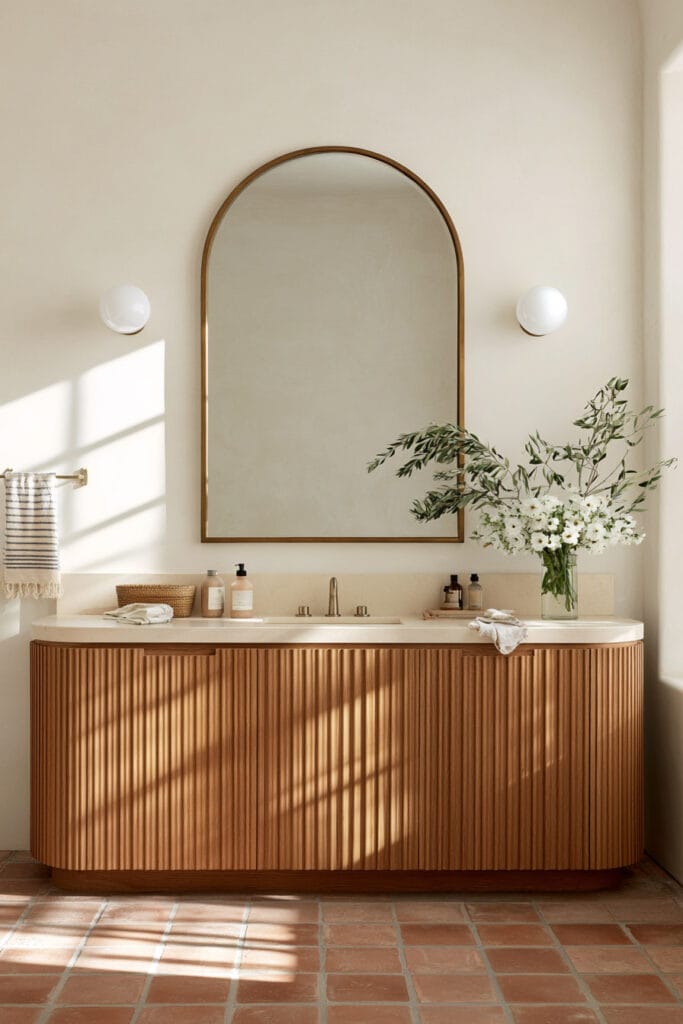
A tall arched brass mirror and rounded wood vanity bring soft, graceful curves to this warm bathroom. Fluted wood adds texture while globe sconces repeat the rounded shapes above. Creamy walls, terracotta flooring, natural greenery, and warm sunlight create an inviting space that feels organic, elegant, and beautifully balanced.
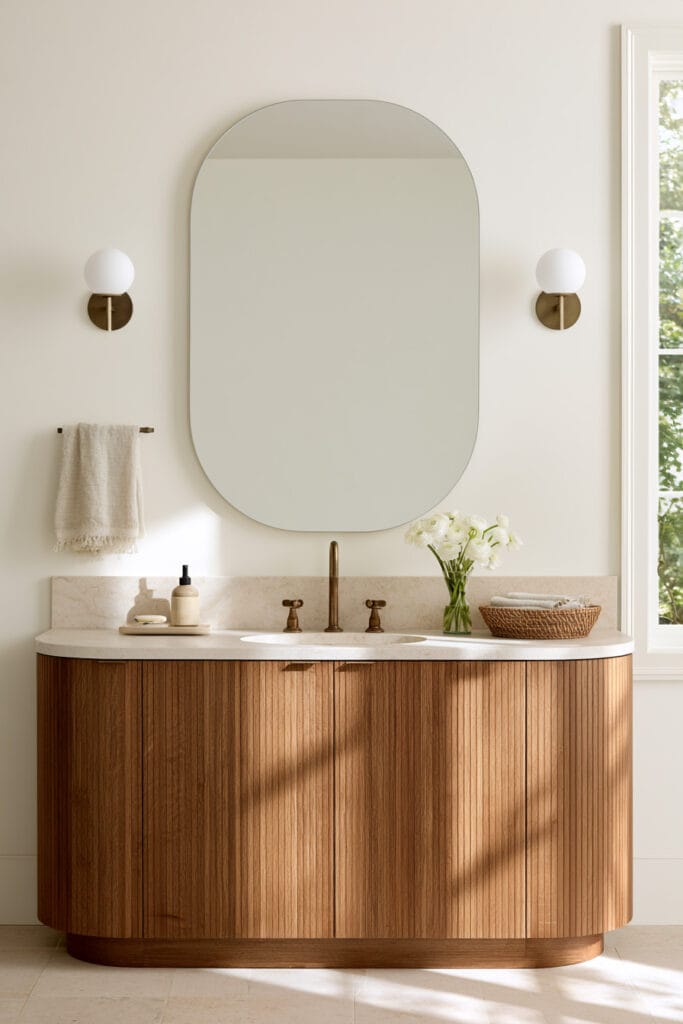
A softly rounded mirror and curved fluted wood vanity bring gentle shapes to this bright, warm bathroom. Globe sconces continue the rounded theme, while creamy stone, warm wood, woven texture, and fresh flowers keep the space feeling natural and inviting. The mix of curves and clean lines creates a modern bathroom that still feels soft and timeless.
Create a Softer Bedroom With a Curved or Scalloped Headboard
The bedroom is one of the most natural places to use rounded shapes because the room should already feel restful and comfortable.
A tall arched headboard creates a strong focal point while keeping the overall look calm. A scalloped headboard adds more decorative detail and can range from subtle to dramatic depending on the size of the curves. Channel-tufted beds, rounded upholstered frames, and curved benches at the foot of the bed can create a similar feeling.
To keep a scalloped headboard from looking too youthful, choose a sophisticated fabric and color. Warm ivory linen feels timeless, while chocolate brown velvet creates a richer, moodier look. Olive green, muted blue, dusty rose, burgundy, and caramel can also feel grown-up when paired with simple bedding.
Balance the headboard with tailored elements. Straight-edged nightstands, crisp linen bedding, and simple wall sconces will keep the room grounded. Rounded nightstands can work too, but they should remain understated so they do not compete with the bed.
A painted arch behind the headboard is a less expensive alternative and can make even a simple bed feel intentionally framed.
For a quieter take on soft bedroom design, How to Create a Japandi Bedroom That Feels Cozy and Elevated has beautiful examples of warm wood, simple furniture, soft textiles, and balanced shapes.
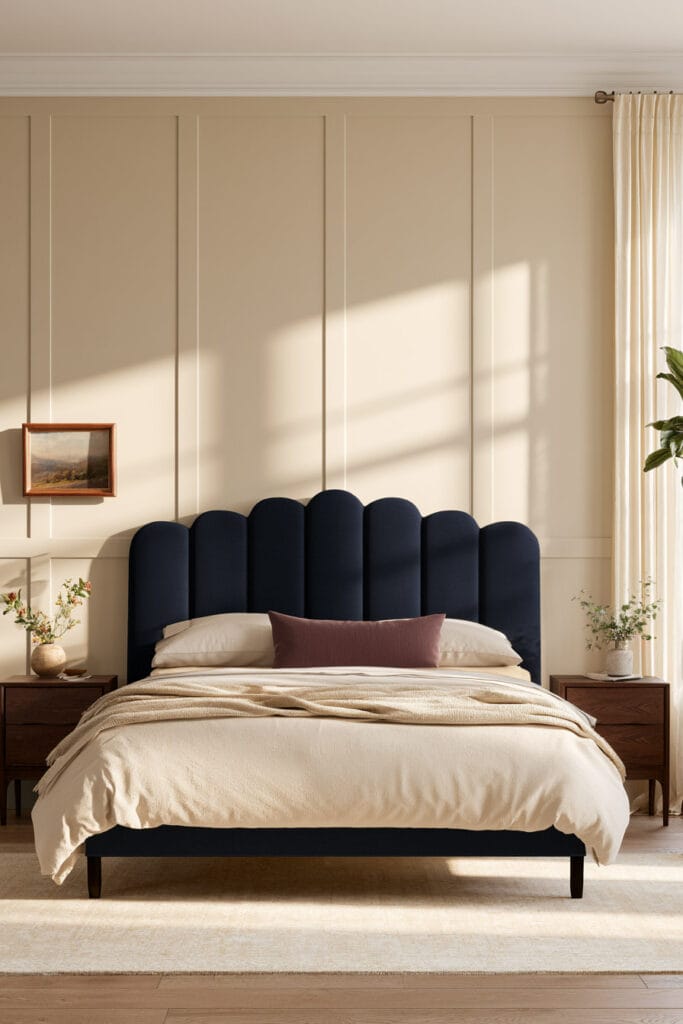
A dramatic navy scalloped headboard gives this warm neutral bedroom a soft, elegant focal point. The repeated rounded panels contrast beautifully with the straight wall molding and wood nightstands, while cream bedding and a muted plum pillow keep the look cozy and sophisticated. It’s an easy way to introduce curves without changing the room’s architecture.
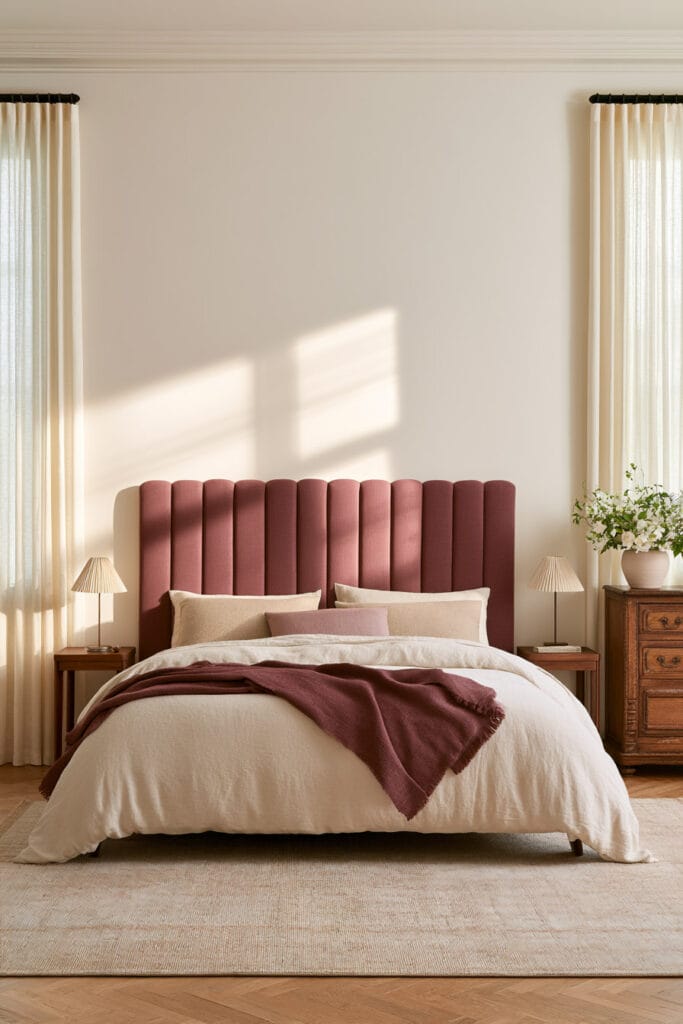
A dusty rose channel-tufted headboard brings soft curves and warm color to this elegant bedroom. The gently rounded tops of the upholstered panels soften the clean lines of the room, while cream bedding, plum accents, flowing curtains, and warm wood furniture create a cozy, layered look that feels romantic without being overly feminine.
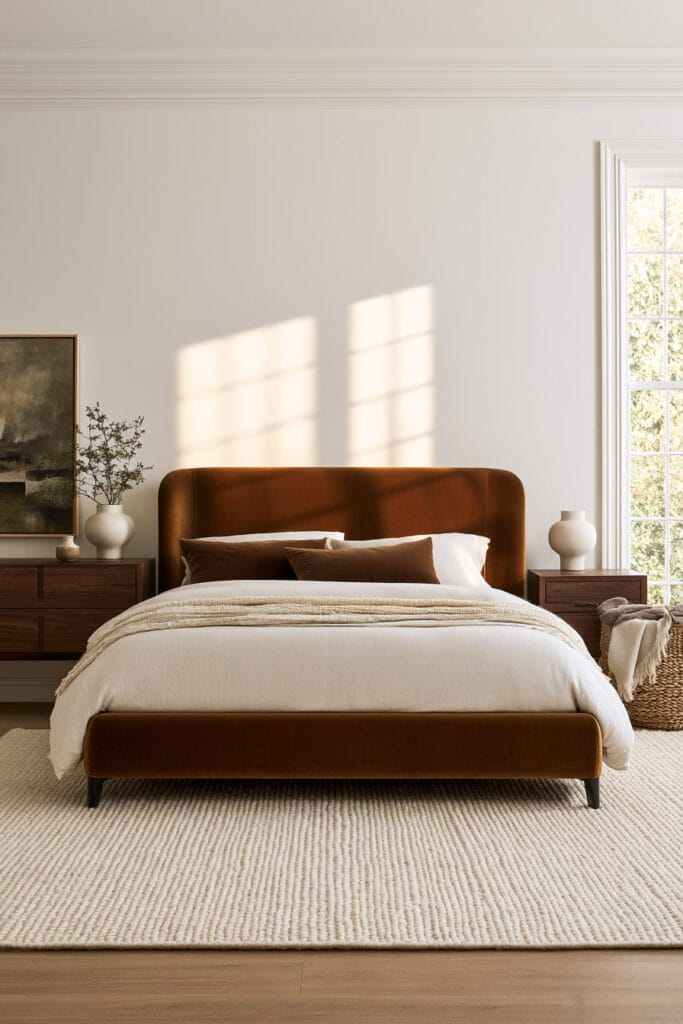
A warm cognac velvet bed with a softly curved headboard gives this neutral bedroom an inviting, sophisticated focal point. Rounded corners soften the clean lines of the wood nightstands, while cream bedding, textured layers, earthy accents, and natural sunlight create a cozy balance of structured and curved shapes.
Add Scalloped Edges to Shelves, Cabinets, and Vanities
Scallops do not always need to appear on a large statement piece. A small shaped edge can give basic cabinetry or shelving a custom, handcrafted feeling.
Scalloped trim beneath an open shelf adds a subtle decorative detail to a kitchen, bathroom, or child’s room. A shaped apron on a vanity can soften a rectangular cabinet without affecting its function. In a living room, a bookcase with gently scalloped shelf edges can bring warmth to an otherwise simple built-in.
The most versatile scallops tend to be slightly larger and less tightly repeated. Tiny, busy curves can quickly feel overly sweet, while broader waves look calmer and more architectural.
Color also changes the effect. Soft cream or natural wood feels understated. Deep olive, dusty blue, burgundy, or chocolate brown can make scalloped cabinetry feel richer and more sophisticated.
For a simple DIY version, lightweight trim can be added beneath an existing shelf and painted to match. It is a small change, but it can make standard furniture look far more personal and thoughtfully designed.
Shaped edges are one way to bring dimension into a room without adding more clutter. You can see more subtle architectural texture in Why Dimensional Surfaces Are Everywhere Right Now, where sculpted and textured details give simple spaces much more character.
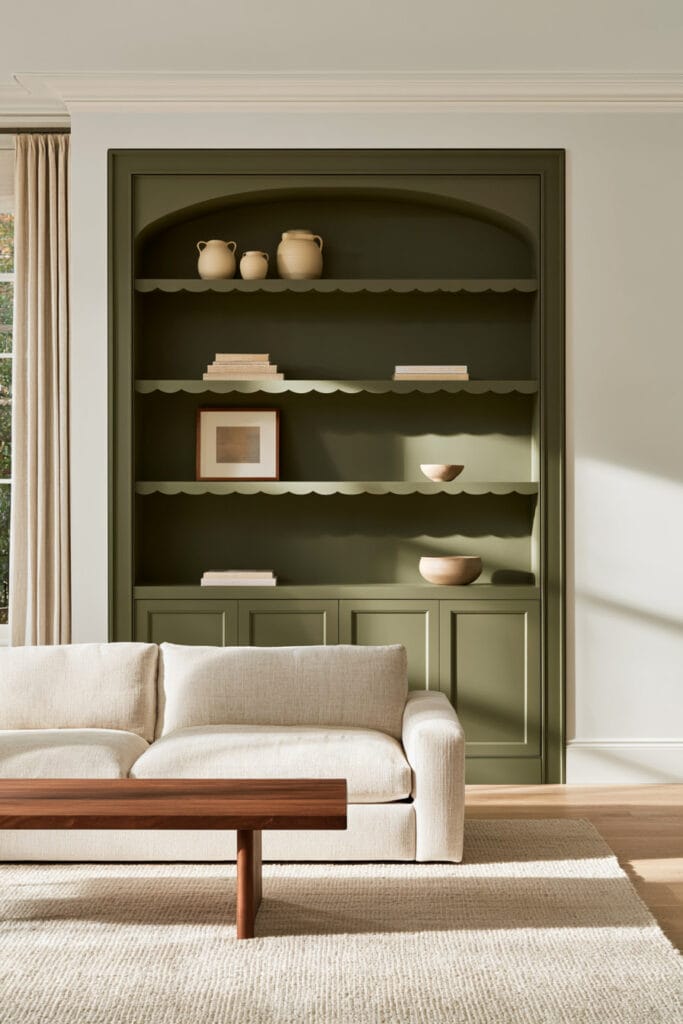
Scalloped shelf edges add a playful but sophisticated detail to this olive green built-in bookcase. The repeating curves soften the structured cabinetry and echo the gently arched top, while cream pottery, simple books, warm wood, and neutral furnishings keep the room feeling refined. It’s a subtle way to bring scallops into a living room without overwhelming the space.
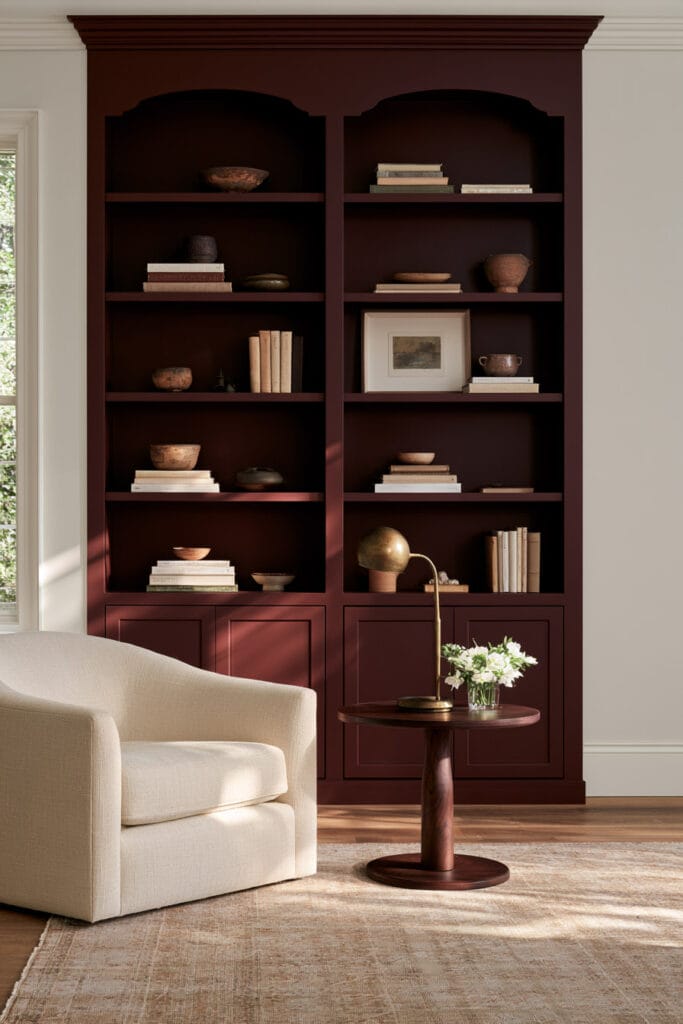
Deep burgundy built-ins gain a softer, more decorative look from the graceful curved trim above each bookcase opening. The subtle curves balance the strong lines of the cabinetry, while a rounded cream chair and circular wood side table continue the softer shapes. Warm pottery, books, and brass lighting give the room a rich, collected feel.
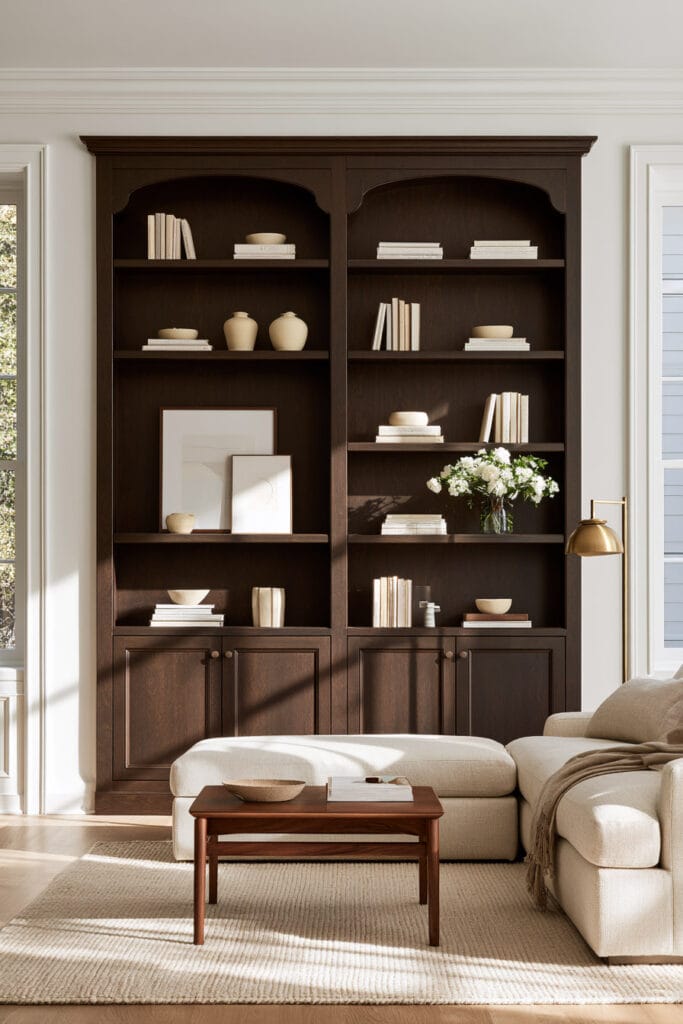
Dark wood built-in bookcases get a softer, more distinctive look from the gently curved trim above each shelving section. The decorative curves break up the strong rectangular lines, while cream upholstery, neutral pottery, books, and warm brass lighting keep the living room elegant and timeless. It’s a subtle way to add curves to traditional cabinetry.
Introduce Scallops Through Curtains, Rugs, and Textiles
Textiles are an easy, low-commitment way to experiment with scalloped decor.
Scalloped curtains can soften a window without relying on a bold print. A Roman shade with a shaped lower edge adds charm to a kitchen or breakfast nook. In a bedroom, scalloped pillow trim or a gently curved bed skirt can echo a rounded headboard.
A scalloped rug is another beautiful option, particularly in an entryway, nursery, bedroom, or small sitting area. Because the outline is already decorative, choose a simple color or subtle pattern so the rug does not feel too busy.
The same principle applies to table linens, upholstery, and throw blankets. One softly shaped border can be enough to make the room feel more playful and collected.
Avoid using scalloped curtains, a scalloped rug, scalloped pillows, and scalloped furniture all in the same space. Select one main textile and repeat the curved idea more quietly through a round lamp or arched mirror. This creates a connection without making the room feel themed.
The same restraint is what makes warm minimalist rooms feel so calming. Create a Peaceful Japandi Bedroom With These Simple Ideas has more inspiration for using linen, natural fibers, soft bedding, and subtle decorative details without overwhelming a room.
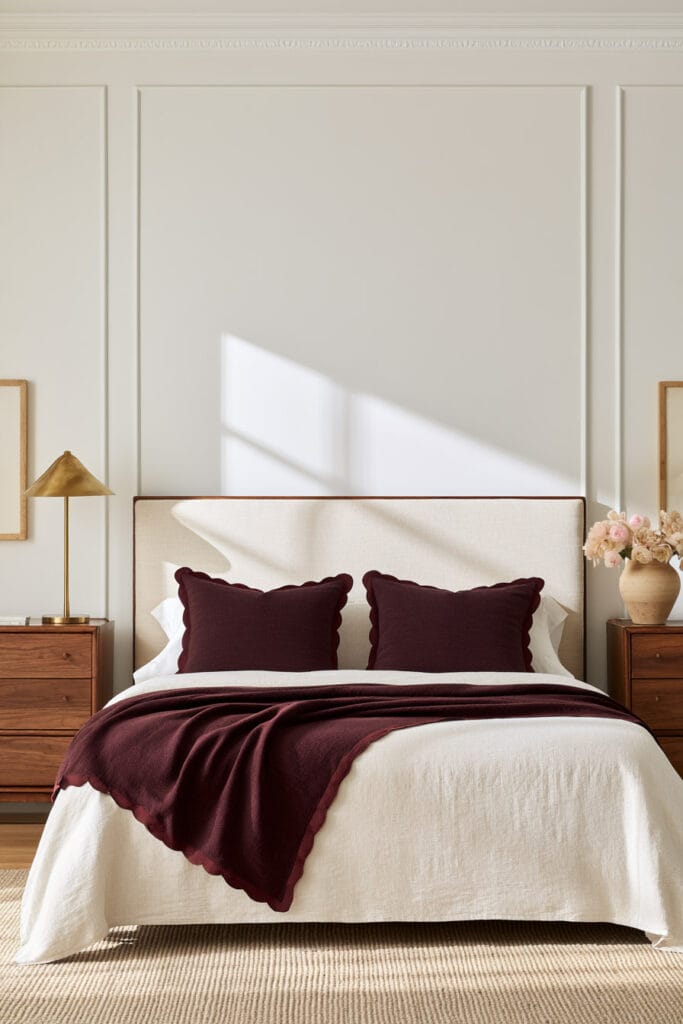
Deep plum pillows and a matching throw with scalloped edges add a soft decorative detail to this elegant neutral bedroom. The small repeating curves bring interest without overwhelming the space, while cream linen bedding, warm wood nightstands, brass lighting, and classic wall molding keep the room sophisticated and timeless.
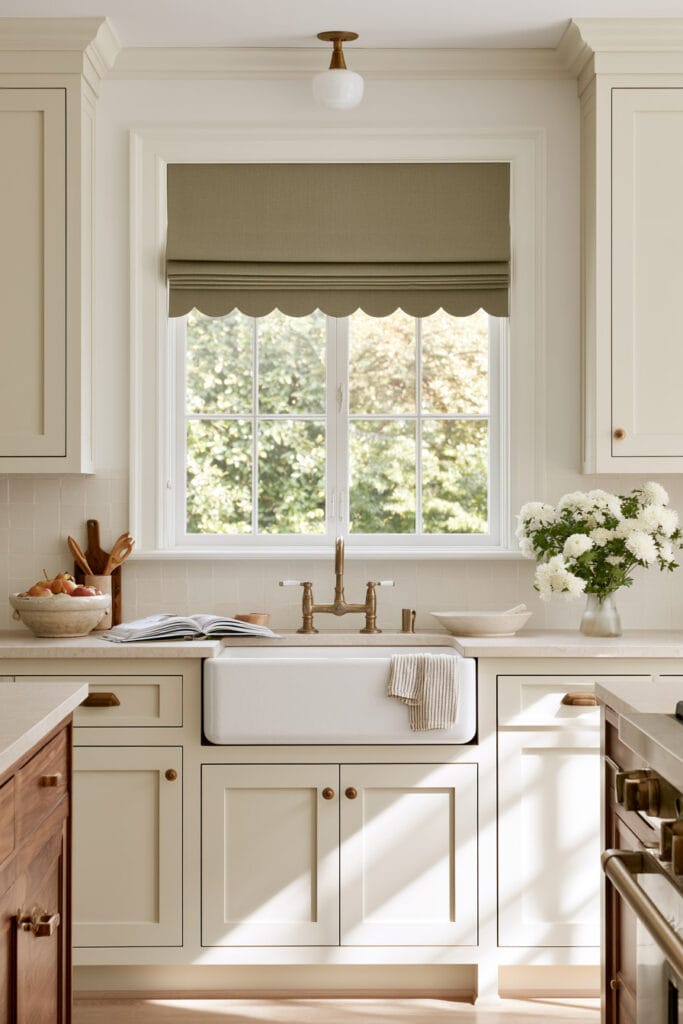
A scalloped Roman shade adds a charming curved detail to this bright, timeless kitchen. The soft olive fabric brings subtle color while the repeating scalloped edge breaks up the straight lines of the window and cream cabinetry. Warm wood, brass hardware, fresh flowers, and natural light keep the space feeling relaxed, elegant, and inviting.
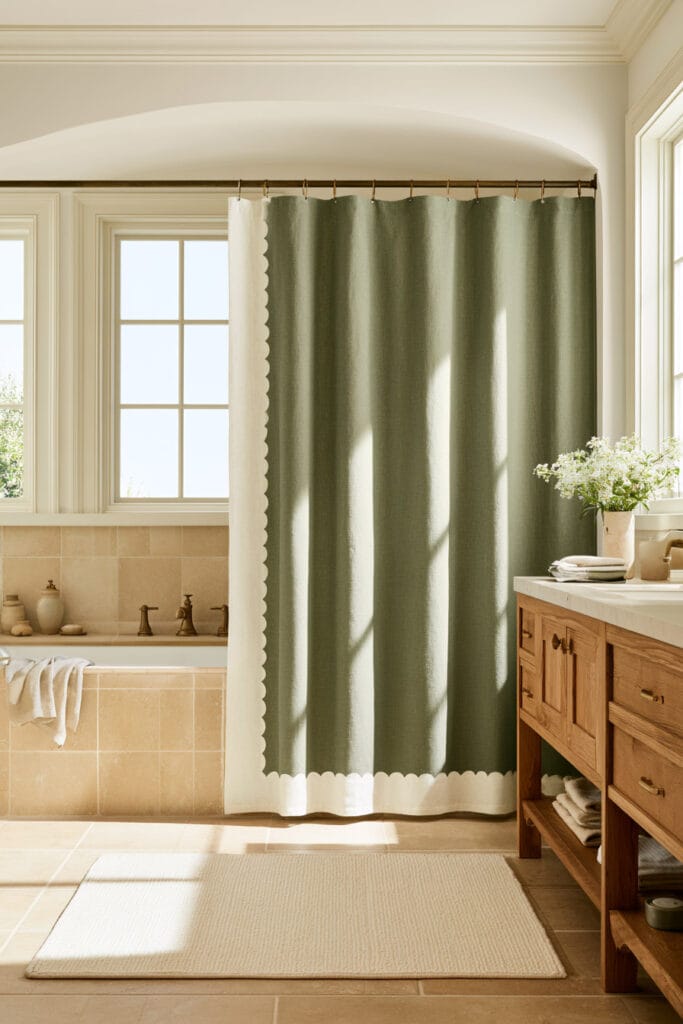
A soft olive green shower curtain with cream scalloped trim brings an unexpected curved detail to this warm, natural bathroom. The playful edging softens the straight lines of the tile and wood vanity, while creamy stone, warm brass, and sunlight keep the look sophisticated. It’s an easy way to introduce scallops through textiles without making the room feel overly decorative.
Choose Lighting With Rounded, Sculptural Shapes
Lighting can soften a room in two ways: through the shape of the fixture and through the warm light it casts.
Globe pendants, mushroom lamps, dome sconces, and rounded ceramic table lamps all introduce curves without taking up much visual space. A sculptural pendant above a dining table can draw attention to the center of the room, while globe sconces can soften the sharp edges of a bathroom vanity or fireplace.
Scalloped and pleated lampshades add a more decorative layer. They work particularly well in bedrooms, cottage-inspired rooms, and traditional interiors where a plain shade may feel too minimal.
Try repeating a shape that already exists in the room. A round pendant can emphasize an arched dining nook. Globe sconces can echo a pill-shaped mirror. A mushroom lamp can complement the rounded corners of a side table.
For evening images and a cozy atmosphere, choose warm bulbs rather than cool white lighting. The soft glow will emphasize plaster, wood, linen, and other natural textures while making curved silhouettes feel even more inviting.
For more examples of lighting paired with clean lines and warm natural materials, these Japandi Bedroom Ideas for a Calm, Cozy Space show how simple pendants and softly shaped lamps can become part of the overall design.
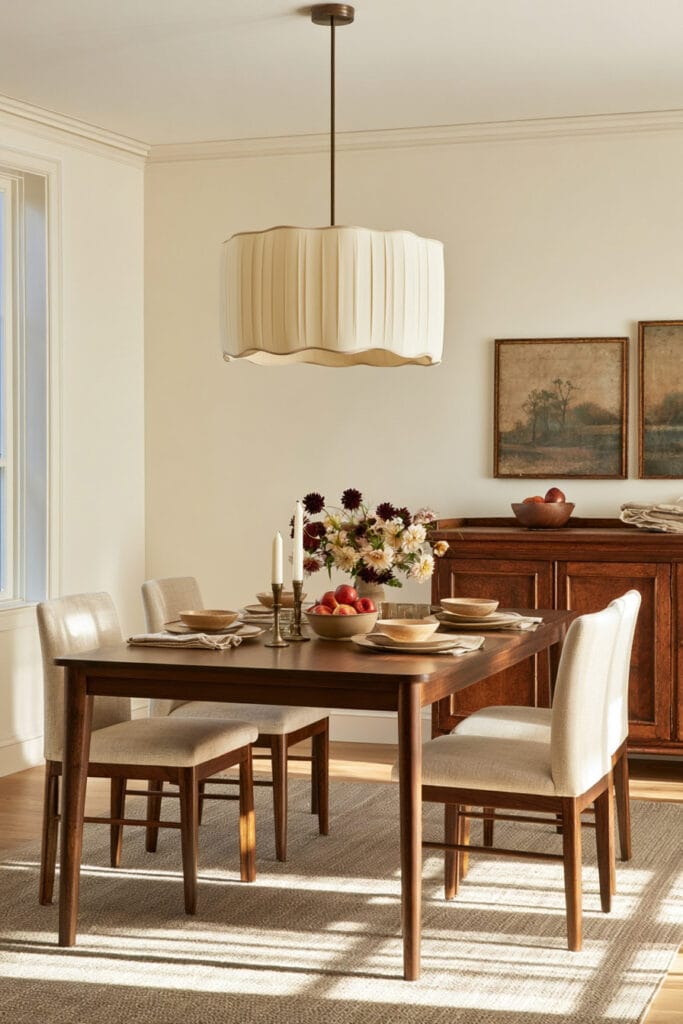
A sculptural fabric pendant with gently scalloped edges brings softness and movement to this warm dining room. Its flowing shape breaks up the straight lines of the wood table and cabinetry, while cream upholstery, vintage-style artwork, flowers, and natural sunlight create a collected, inviting look. The statement light adds curves without overwhelming the room.
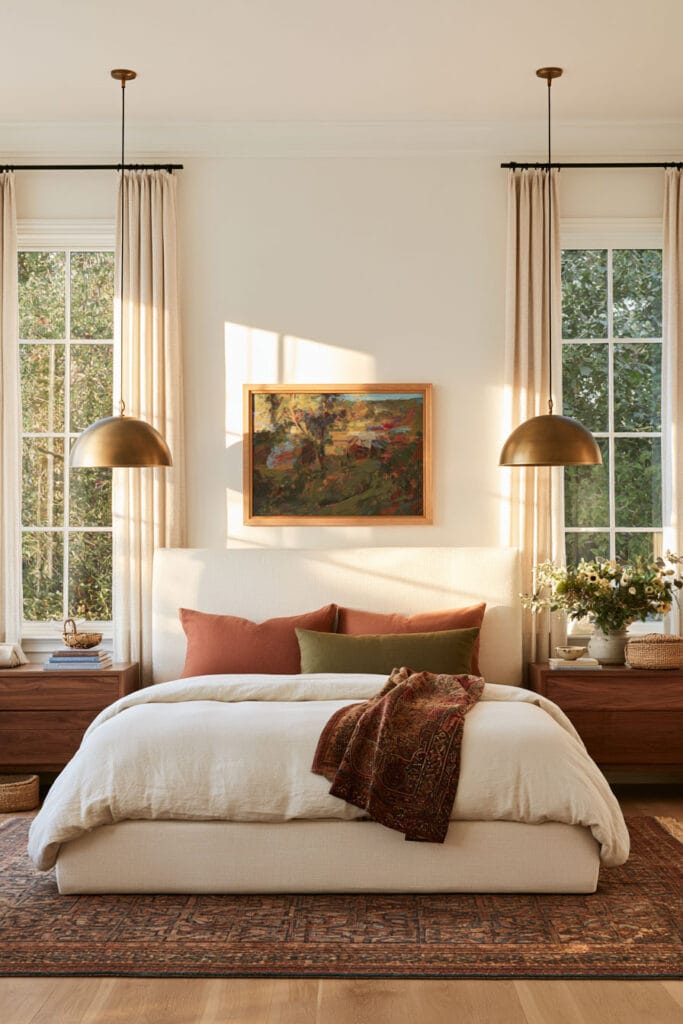
A pair of rounded brass pendant lights brings warmth and sculptural curves to this inviting bedroom. Their dome shapes soften the straight lines of the tall windows and wood nightstands, while cream bedding, rust and olive pillows, a vintage-style rug, and layered textiles create a cozy, collected look. The curved lighting adds softness without making the room feel overly decorative.
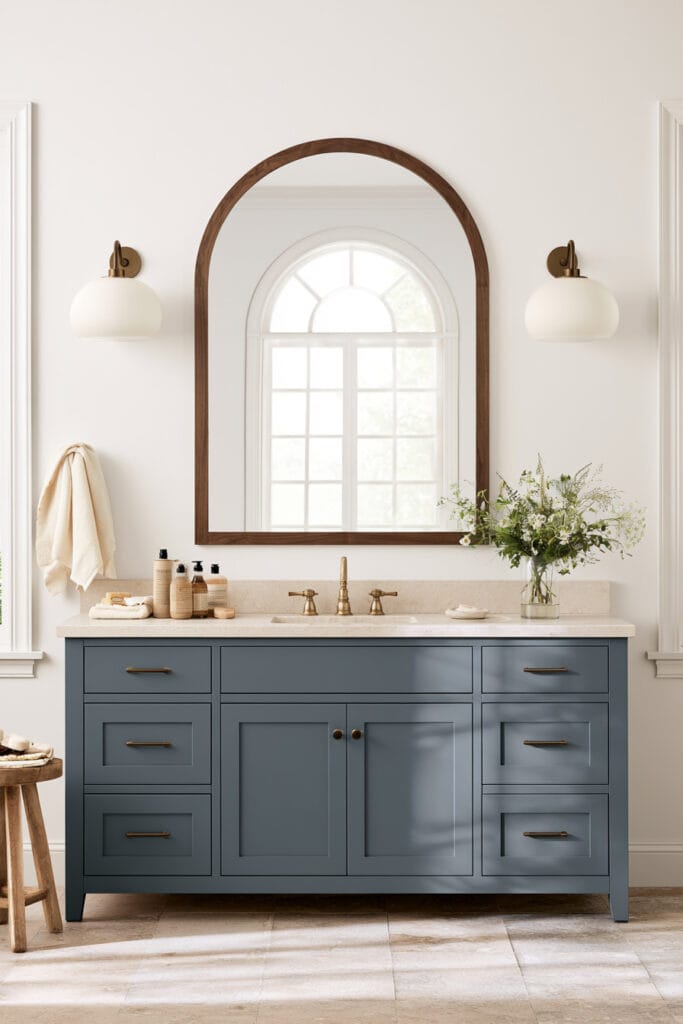
Rounded globe sconces and a tall arched wood mirror bring soft curves to this bright bathroom. The sculptural lighting balances the straight lines of the blue-gray vanity, while warm wood, brass fixtures, creamy stone, and fresh greenery keep the space feeling inviting. Repeating rounded shapes is an easy way to make a clean-lined bathroom feel softer.
Repeat Curves Through Small Decorative Accents
You do not need to purchase new furniture or renovate to make a room feel softer. Small accessories can introduce the same idea in a quieter way.
A wavy picture frame, scalloped tray, round planter, or curved ceramic vase can break up the straight lines of a shelf or console. Arched artwork can bring height to a wall arrangement, while an organic bowl adds movement to a rectangular coffee table.
The most effective styling usually includes only a few shaped pieces. For example, an entryway might feature an arched mirror, a rounded lamp, and one scalloped bowl. The three elements relate to one another, but each has a different scale and purpose.
Avoid grouping every curved accessory together. Spread the shapes naturally throughout the room so the repetition feels subtle. A round planter near the window, an arched frame on the shelf, and a dome lamp beside the sofa will create a gentle visual rhythm.
These smaller accents are also useful for testing the look before investing in a curved sofa, scalloped headboard, or architectural change.
Even plants and planters can help introduce softer silhouettes. These Indoor Plant Decor Ideas for Every Space have plenty of inspiration for using rounded pots, natural greenery, and organic shapes to break up straight furniture lines.
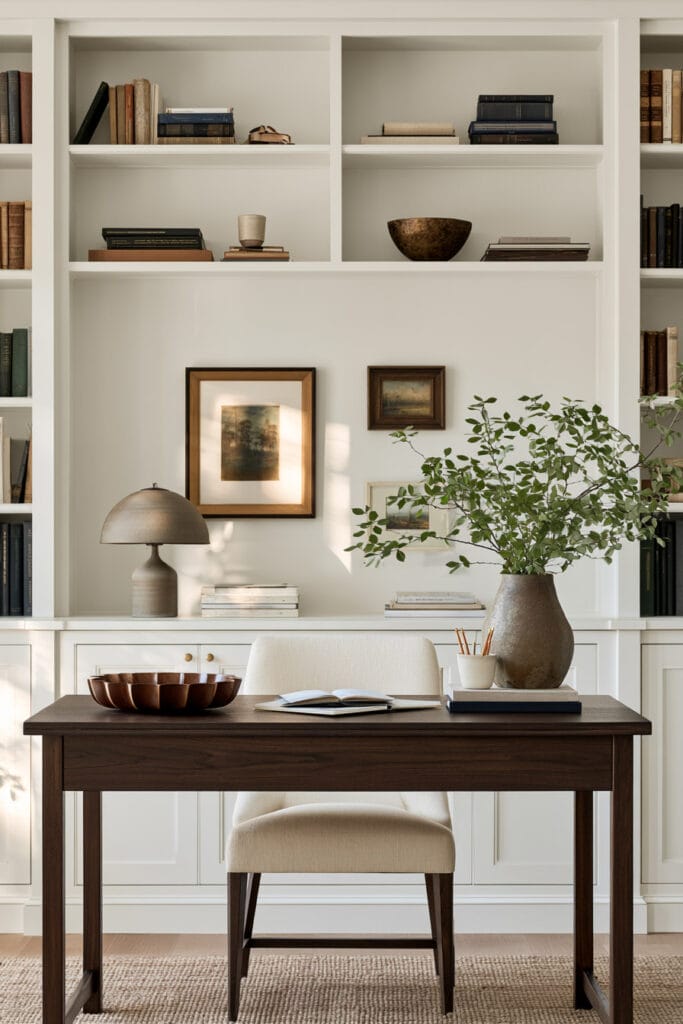
Small rounded accents bring softness to this warm, collected home office without changing the room’s classic structure. A dome-shaped table lamp, curved ceramic vase, sculptural bowl, and softly upholstered chair introduce gentle shapes among the straight lines of the desk and built-ins. The mix feels subtle, balanced, and easy to recreate.
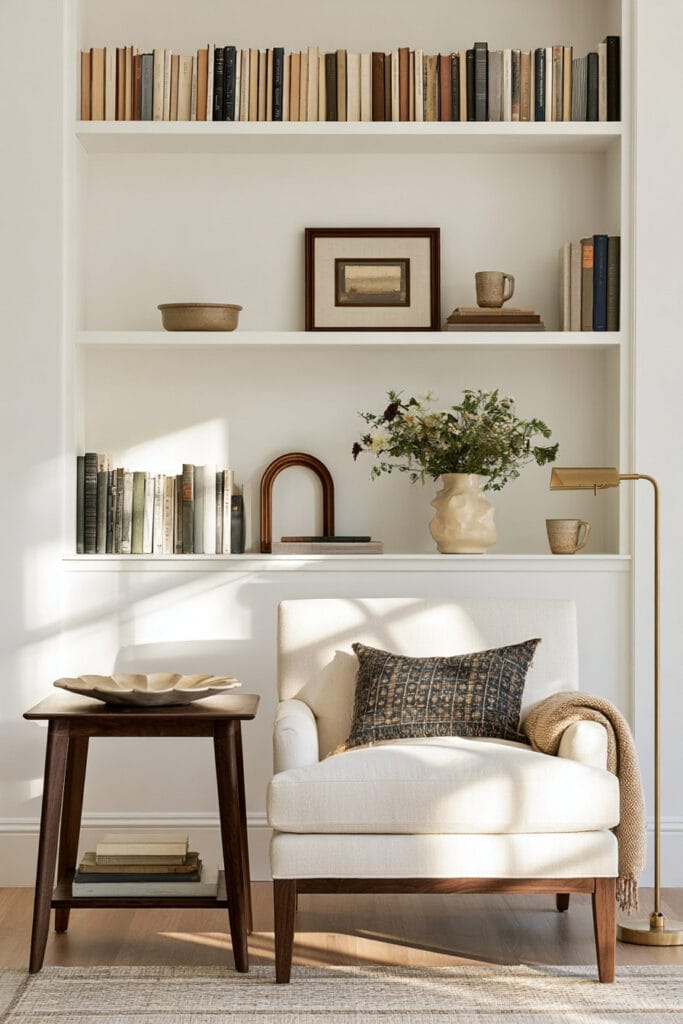
Small curved accents add softness and personality to this cozy reading corner. An arched decorative object, sculptural ceramic vase, wavy-edged bowl, rounded armchair, and curved brass floor lamp introduce gentle shapes throughout the space. Against the straight lines of the white built-ins, these subtle curves make the room feel warmer and more thoughtfully layered.
Pair Soft Shapes With Warm Colors and Natural Materials
Arches, curves, and scallops feel most timeless when they are paired with materials that have natural warmth and texture.
Plaster and limewash emphasize the sculptural quality of an arch. Walnut and oak add depth to rounded tables and cabinetry. Linen, bouclé, wool, and velvet make curved furniture feel comfortable rather than overly formal. Travertine, limestone, rattan, handmade ceramic, and aged brass bring quiet variation to a neutral room.
Warm color combinations can enhance the softness even further. Cream, walnut, and olive green feel grounded and organic. Chocolate brown, ivory, and muted blue create a richer, more sophisticated palette. Terracotta, sand, and aged brass bring Mediterranean warmth, while dusty rose and warm oak offer a gentler traditional look.
You can also use stronger contrast. A black curved chair against warm white walls can look dramatic, while caramel upholstery and cream textiles keep it from feeling severe.
Natural materials prevent playful shapes from becoming overly trendy. If this warm, organic combination is the look you love, How Texture Is Transforming Modern Interiors has more ideas for adding depth through stone, plaster, wood, and dimensional surfaces while keeping the overall room calm and sophisticated. They give the room depth, texture, and a sense that every feature belongs there.
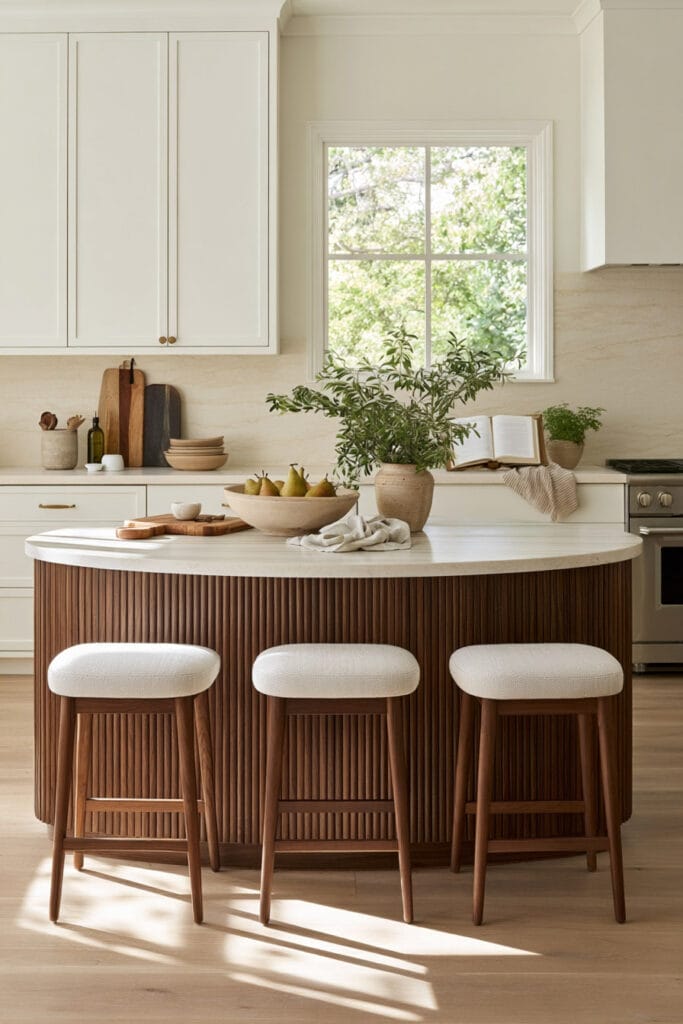
A large curved wood kitchen island brings together soft shapes, warm color, and natural materials in this bright kitchen. Fluted wood adds rich texture, while the rounded stone countertop and softly upholstered stools repeat the gentle curves. Cream cabinetry, greenery, and warm sunlight keep the space feeling organic, welcoming, and beautifully balanced.
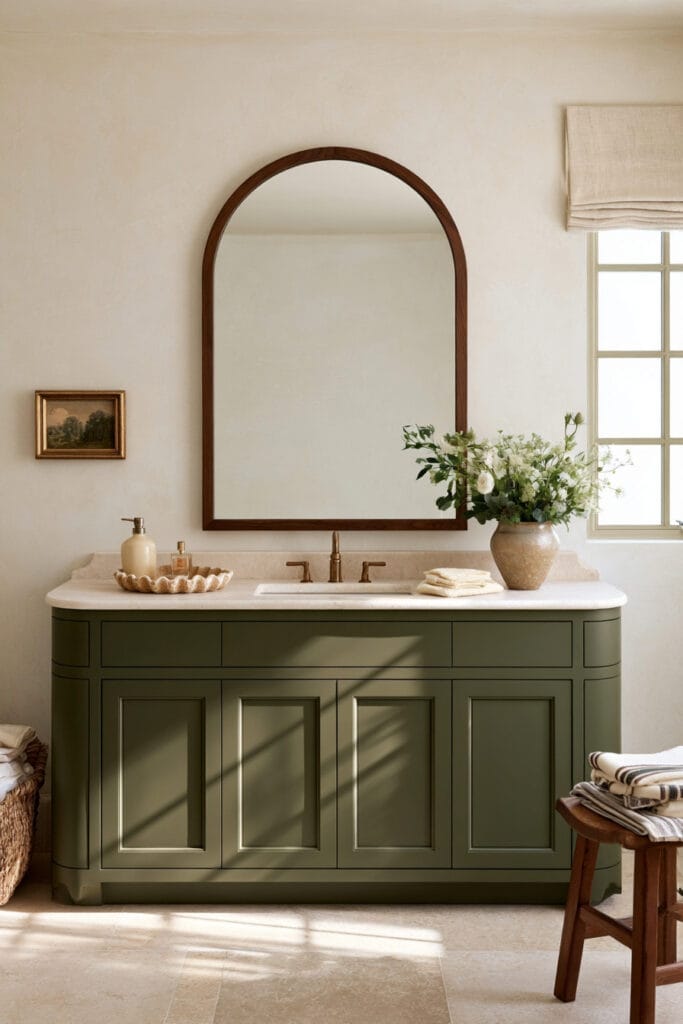
A curved olive green vanity and tall arched wood mirror bring soft shapes and earthy color to this warm bathroom. Rounded corners gently contrast with the paneled cabinetry, while creamy stone, warm wood, woven textures, fresh flowers, and aged brass create a natural, inviting look. The mix feels timeless, relaxed, and beautifully balanced.
Balance Curves With Straight Lines for a Timeless Look
The secret to decorating with soft shapes is balance.
Begin with one large curved focal point. This might be an arched doorway, curved sofa, scalloped headboard, rounded island, or oversized mirror. Then repeat the idea once or twice through smaller details such as a round lamp, oval table, globe sconce, or curved vase.
Allow straight lines to provide structure around those pieces.
A curved sofa can sit on a rectangular rug beneath square artwork. A scalloped headboard can be paired with simple nightstands and tailored bedding. A rounded kitchen island can be surrounded by straight cabinetry and linear pendant lights. An arched mirror can hang above a rectangular vanity.
Try to avoid making every object a statement. Too many curved pieces can cause the room to lose focus, just as too many patterns can make a space feel crowded. Mixing several different scallop sizes can also create visual confusion.
A helpful formula is to use one strong curve, one or two quieter echoes, and plenty of clean lines around them. That combination allows the room to feel softer while remaining polished and timeless.
Black and white rooms are another good example of why contrast and balance matter. These Timeless Black and White Home Decor Ideas show how structured lines, softer furnishings, natural texture, and carefully chosen shapes can work together without making a space feel harsh.
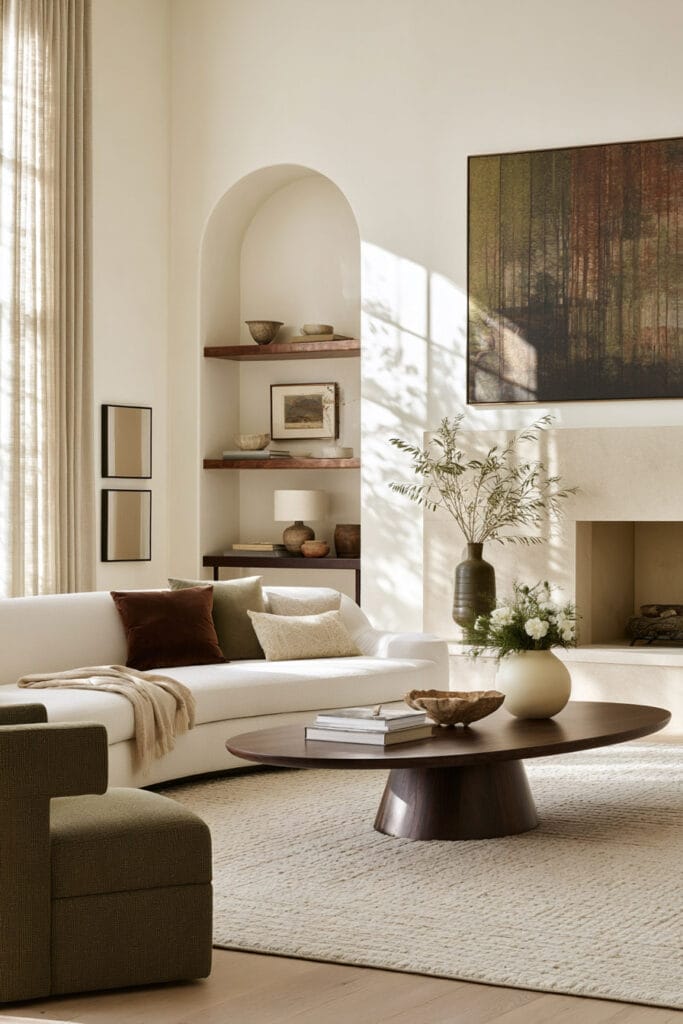
A large oval wood coffee table and arched wall niche bring graceful curves to this warm, sophisticated living room. Straight-lined seating, artwork, shelving, and fireplace details keep the softer shapes grounded, while cream upholstery, rich wood, olive accents, and natural textures create a timeless balance between curved and structured forms.
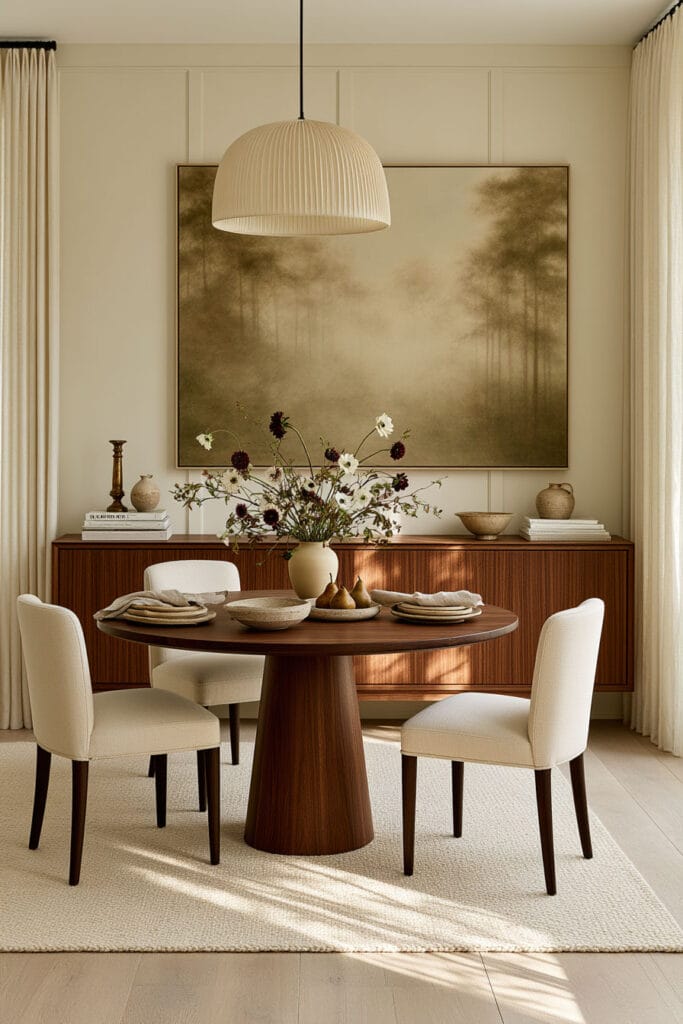
A round wood pedestal table and dome-shaped pendant bring soft curves to this warm, elegant dining room. Straight-lined wall molding, framed artwork, cream chairs, and a long wood sideboard provide structure, creating a beautiful balance between rounded and angular forms. Warm wood, natural textures, and soft neutrals keep the look timeless and inviting.
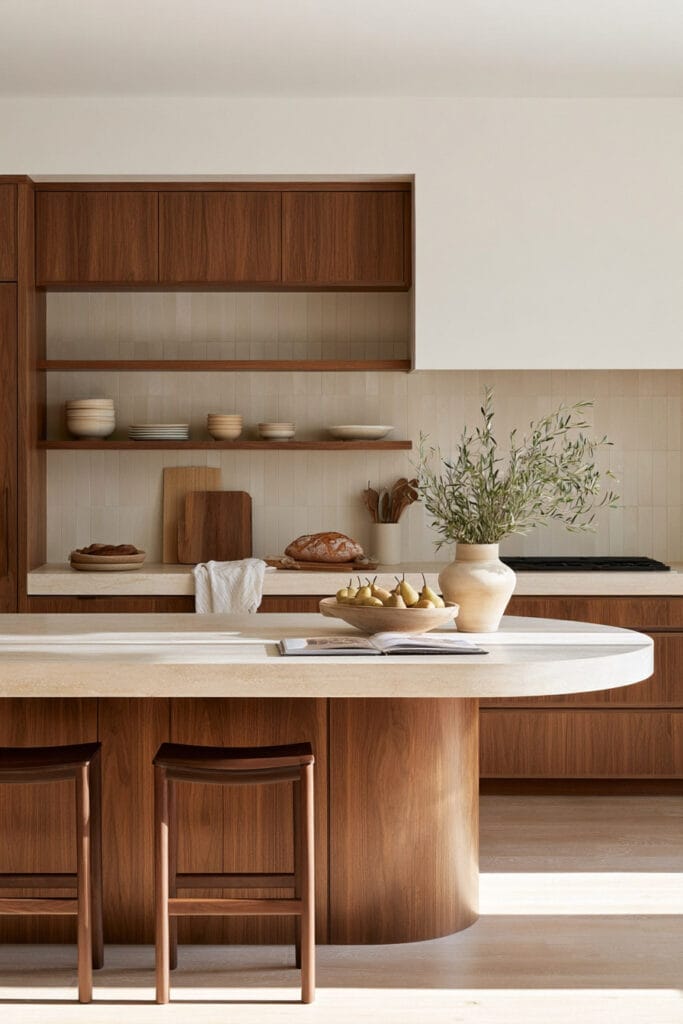
A softly curved wood kitchen island brings gentle movement to this warm, modern kitchen while straight-lined walnut cabinetry keeps the design grounded. The rounded stone countertop, curved island base, pottery, and organic greenery soften the clean architectural lines. The mix of warm wood, creamy stone, curves, and structured forms feels timeless and beautifully balanced.
Frequently Asked Questions
Are arches and curved furniture still in style?
Arches and curves have moved beyond a single decorating trend because they solve a common design problem: they soften the many straight lines found in most homes. Simple shapes, warm colors, and natural materials help them feel lasting rather than overly fashionable.
How do you add curves to a square room?
Start with one noticeable feature such as a round coffee table, arched mirror, curved chair, oval rug, or globe pendant. These pieces create contrast without requiring structural changes.
Can you mix arches, curves, and scallops in one room?
Yes, but one shape should take the lead. An arched doorway might be the main feature, while a round lamp and gently scalloped bowl act as smaller supporting details.
How many curved pieces should a room have?
There is no exact number, but one larger focal point and two smaller curved accents are usually enough. The room should still contain straight lines to keep the design balanced.
How can renters add arches without construction?
Painted arches, removable wallpaper, arched mirrors, curved furniture, folding screens, rounded lighting, and scalloped textiles can all create the look without permanent renovation.
How do you make scalloped decor look sophisticated?
Choose broader, simpler scallops instead of very small or busy patterns. Pair them with grown-up colors, natural materials, and minimal styling. Limit the motif to one or two areas of the room.
Do curved sofas work in small living rooms?
A gently curved sofa can work in a small room when it is properly scaled. Pair it with a compact oval coffee table, avoid bulky side furniture, and leave enough open space for comfortable movement.
Start With One Soft Shape
Arches, curves, and scallops can completely change the feeling of a room, but you do not have to use them everywhere.
Begin with one element that suits your space. Hang an arched mirror above an entryway console. Replace a square coffee table with an oval one. Add a rounded chair to a reading corner or choose a scalloped headboard for the bedroom. Even a globe lamp, curved planter, or shaped curtain edge can make a room feel more relaxed.
The most beautiful interiors combine softness with structure. Straight lines give the room order, while curves add movement, warmth, and personality. When the two are balanced, a space feels polished without feeling rigid and welcoming without becoming overly decorative.
That balance is also at the heart of The Kitchen Trends Everyone Is Obsessed With Right Now—and Why They Work, where warm wood, stone, plaster, and clean architectural lines come together without making the space feel cold.
A single arch, curve, or scalloped edge may seem like a small detail, but it can be exactly what a room needs to feel softer, more inviting, and beautifully complete.